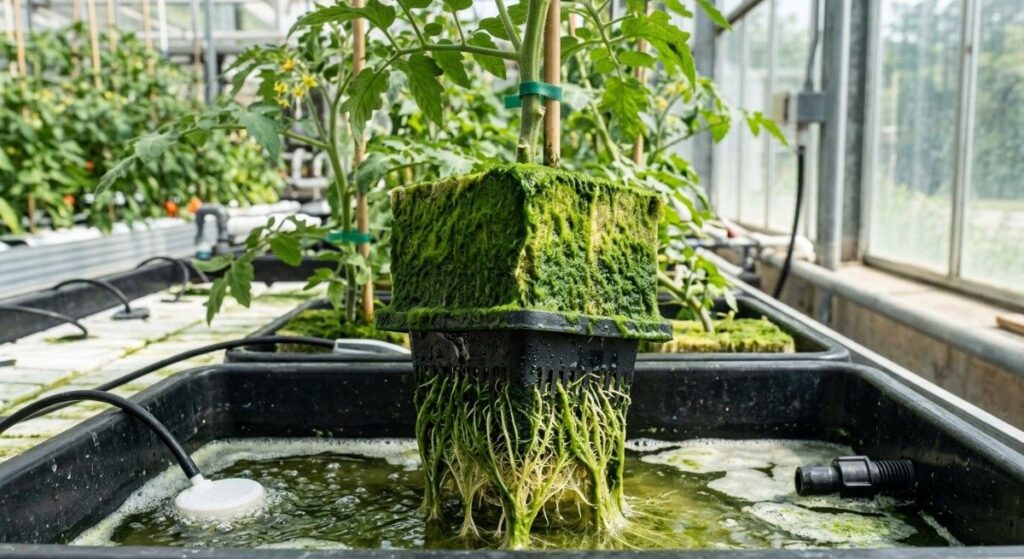
Picture this: you’ve spent weeks perfecting your hydroponic setup. The pH is dialed in, your nutrients are balanced, and your plants are thriving. Then one morning you lift the reservoir lid and find a slimy green coating creeping across the walls, roots, and tubes of your system. That’s algae — and if you’ve grown hydroponically for any length of time, this scenario is all too familiar.
Algae in hydroponics is one of the most common and frustrating challenges growers face. While a small amount of algae might seem harmless, left unchecked it can starve your plants of oxygen, clog irrigation lines, harbor harmful pathogens, and ultimately devastate an entire crop. The good news? With the right knowledge and proactive steps, algae is entirely manageable.
This comprehensive guide covers everything you need to know about algae in hydroponic systems — what causes it, why it’s dangerous, and most importantly, how to prevent and eliminate it so your plants can grow in a clean, healthy environment.
What Is Algae and Why Does It Thrive in Hydroponic Systems?
Algae are simple, photosynthetic organisms that belong to a diverse group of aquatic life forms. Unlike fungi or bacteria, algae use light and carbon dioxide to produce energy — the same basic process as your plants. There are thousands of species, but in hydroponic systems, the most common culprits are green algae (Chlorophyta) and blue-green algae, which are technically cyanobacteria.
The Three Ingredients That Feed Algae Growth
Algae don’t just appear randomly. They require three things to flourish:
1. Light — Algae are photosynthetic. Any nutrient solution exposed to direct or indirect light becomes a candidate for algae colonization. This is especially problematic in systems using transparent or translucent components.
2. Nutrients — Hydroponic nutrient solutions are rich in nitrogen, phosphorus, and potassium — the exact minerals algae need to grow. Your plants’ food is also algae’s food.
3. Water — Hydroponic systems are, by definition, water-based. This creates the ideal wet environment algae need to reproduce and spread rapidly.
When these three elements combine in an unmanaged system, algae can double in population every few hours under optimal conditions. A trace amount of algae visible today can become a full-blown bloom within 48 to 72 hours.
Blue-Green Algae: A Special Concern
Among algae types, cyanobacteria (commonly called blue-green algae) deserve special attention. Some strains produce toxins called cyanotoxins that can harm plant roots and are dangerous to humans and animals. If you notice a dark, almost black-green slime with a foul odor, treat it as a serious contamination issue requiring immediate action.
Why Algae Is Harmful to Your Hydroponic Garden
Many new growers assume algae is just an aesthetic nuisance. In reality, an algae bloom can silently cripple your entire operation before visible damage appears on your plants.
Oxygen Depletion in the Root Zone
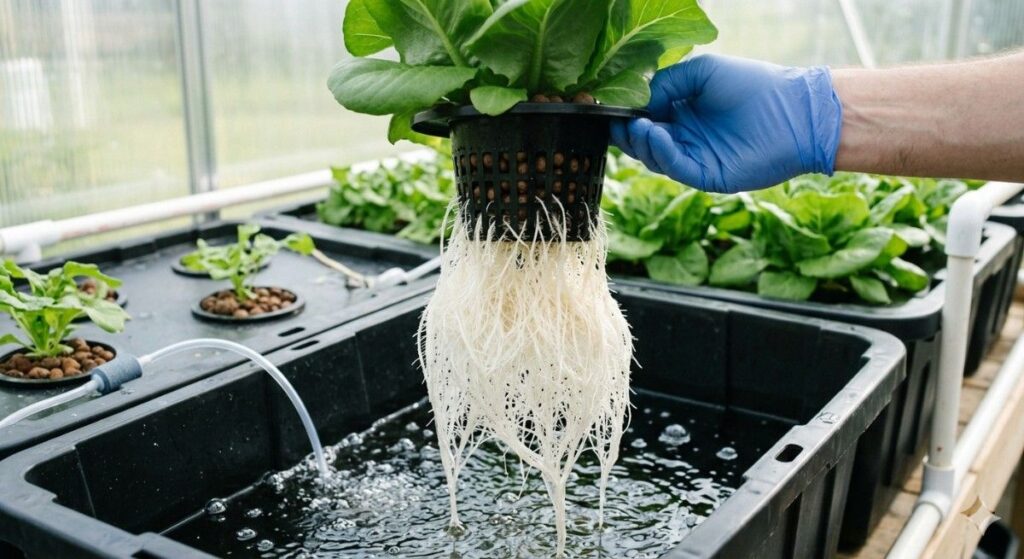
During the night cycle, algae — like all living organisms — consume oxygen through respiration. In a reservoir heavily contaminated with algae, dissolved oxygen levels can drop dramatically overnight. Low oxygen in the root zone directly causes root rot, a condition where beneficial aerobic bacteria die off and pathogenic anaerobic bacteria take over. The result is brown, slimy, foul-smelling roots and stunted, wilting plants.
Nutrient Competition and Imbalance
Algae consume the same nutrients your plants need. A heavy algae bloom can shift the nutrient balance in your reservoir, depleting specific minerals faster than expected. This leads to nutrient deficiencies in your plants — yellowing leaves, poor growth, and reduced yields — even if you’re following a precise feeding schedule.
Clogged Lines and System Failures
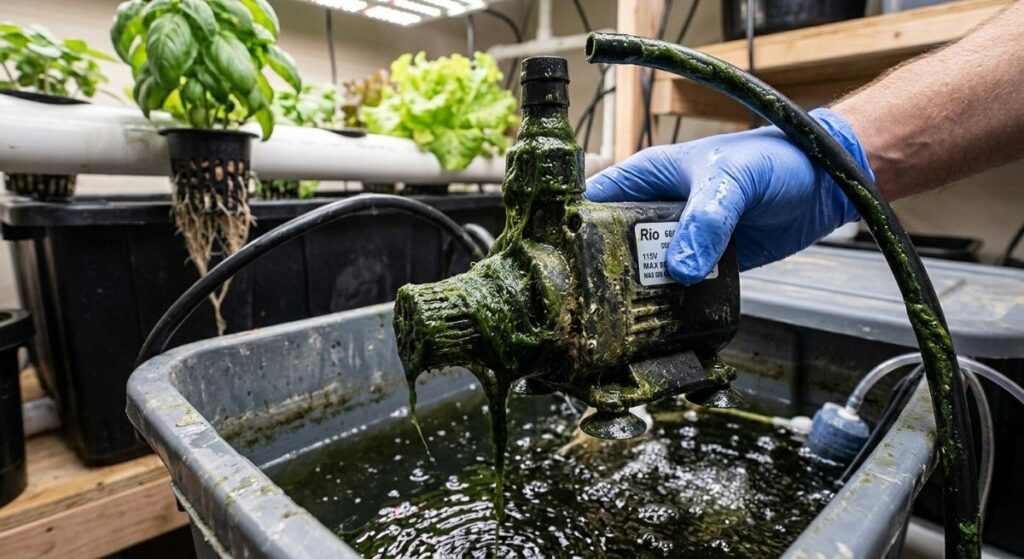
Algae biofilms — the slimy mats that algae form on surfaces — accumulate inside irrigation lines, drip emitters, and pump intakes. Over time, this buildup restricts water flow, causes uneven irrigation, and can cause complete blockages. In worst-case scenarios, pumps burn out from the added resistance, leading to costly repairs or replacements.
Harboring Pathogens
Algae create ideal conditions for harmful microorganisms like Pythium (the primary cause of root rot), Fusarium, and various bacteria. The biofilm acts as a protective matrix where these pathogens thrive, making the system much harder to clean and disinfect even after the algae itself is removed.
How to Prevent Algae in Your Hydroponic System
Prevention is always easier — and less expensive — than treatment. The strategies below address each of the three conditions algae need to grow: light, nutrients, and water access.
Light Exclusion: The Single Most Effective Prevention Method
Since light is a prerequisite for algae photosynthesis, eliminating light from your nutrient solution is the most powerful preventive measure available.
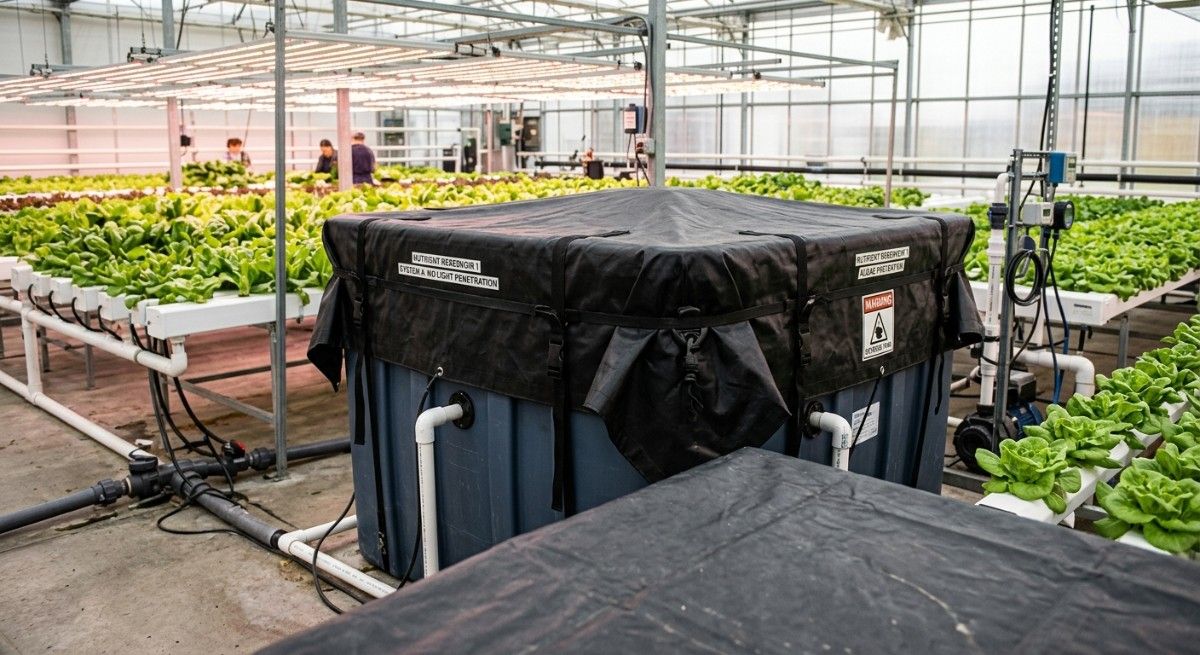
Use opaque reservoirs and components. Replace any clear or translucent tanks, tubes, or net pot covers with solid black or dark-colored alternatives. Black buckets, black tubing, and black reservoir lids are inexpensive and highly effective.
Cover all light entry points. Inspect your system carefully for gaps around net pot holes, lid edges, and tubing entry points. Use foam rings, black tape, or rubber grommets to seal every potential light leak.
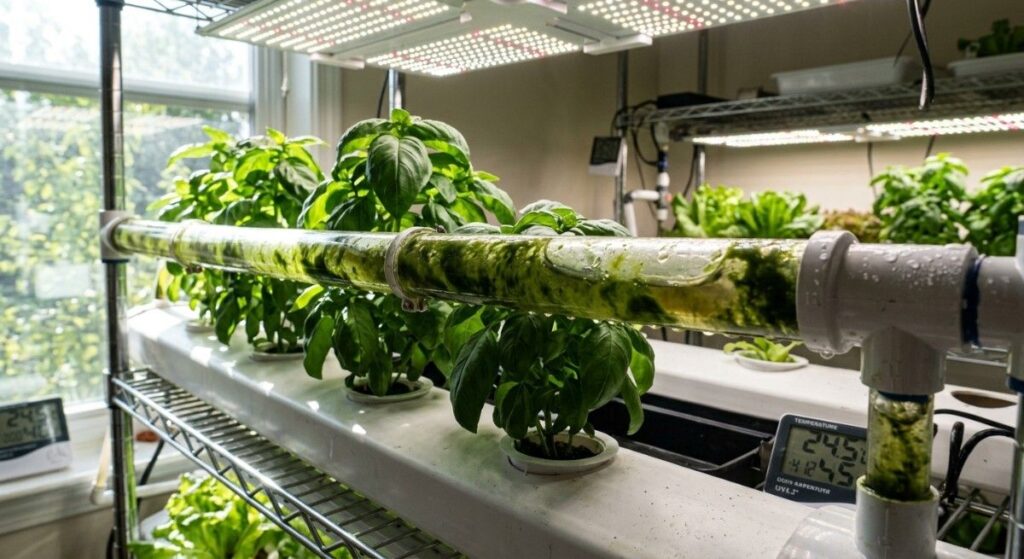
Wrap exposed tubing. If your irrigation lines run through lit areas, wrap them in reflective or black tape. Flexible black tubing is widely available and should be your default choice for all hydroponic plumbing.
Grow room lighting management. Avoid placing your reservoir directly under grow lights where possible. Position lights to maximize plant canopy coverage while minimizing light spillage onto the reservoir and system components.
Maintaining System Hygiene
Clean systems are resistant systems. Algae struggle to gain a foothold in well-maintained hydroponic setups.
Establish a regular cleaning schedule. Between each grow cycle, thoroughly clean your entire system with a hydrogen peroxide solution (3% concentration works well) or a diluted bleach solution (1 part bleach to 10 parts water). Rinse extensively with clean water before reusing.
Remove plant debris promptly. Fallen leaves, dead roots, and other organic matter decompose in the reservoir, providing extra nutrients for algae and pathogens. Skim or remove debris from your nutrient solution at least every few days.
Sanitize new equipment. Before introducing any new components to your system — net pots, grow media, or plumbing parts — rinse and sanitize them to avoid introducing algae spores from the outside.
Water Temperature Management
Algae growth rates increase dramatically in warm water. Keeping your nutrient solution between 65°F and 72°F (18°C to 22°C) significantly slows algae reproduction while keeping conditions ideal for most hydroponic crops. Use an aquarium thermometer to monitor reservoir temperature and consider a water chiller if your grow room runs hot.
Beneficial Microorganisms as a Biological Barrier
One of the most elegant solutions to algae control is introducing beneficial bacteria and fungi that outcompete algae for nutrients and space. Products containing Bacillus subtilis, Trichoderma, and mycorrhizal fungi can colonize the root zone and reservoir, creating a living biological barrier against algae and harmful pathogens. These products work best as part of a preventive program rather than as a cure after algae has established itself.
How to Eliminate Algae from an Active Hydroponic System
Despite your best prevention efforts, algae can still appear — especially in mature systems, during hot weather, or when equipment ages. Here’s how to deal with an active algae problem without harming your plants.
Step 1: Block the Light Source Immediately
The first action when you discover algae is to cut off its energy supply. Cover or replace any transparent components, seal light leaks, and reduce any ambient light reaching the reservoir. Without light, algae cannot sustain its population and will begin to die off.
Step 2: Partial Nutrient Solution Change
Drain and replace 50% of your nutrient solution with fresh, properly pH-balanced water and nutrients. This dilutes the algae population, reduces nutrient concentration for the algae, and refreshes the dissolved oxygen in the system. For severe blooms, a full reservoir drain and refill is advisable.
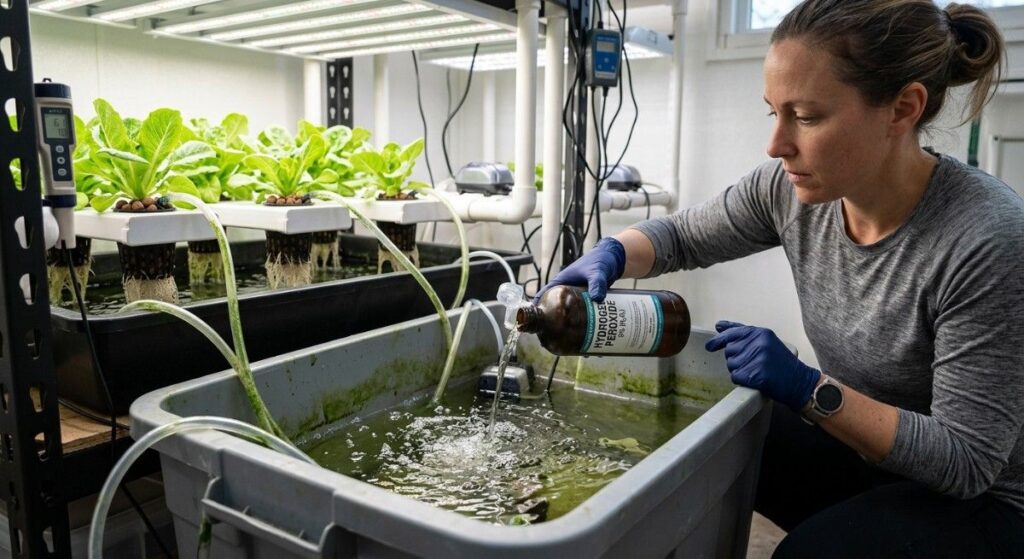
Step 3: Hydrogen Peroxide Treatment
Food-grade hydrogen peroxide (H₂O₂) at 3% concentration is one of the safest and most effective treatments for algae in active hydroponic systems. Add 3 ml per gallon of nutrient solution and allow it to circulate for several hours. Hydrogen peroxide breaks down into water and oxygen, leaving no harmful residue and actually boosting dissolved oxygen levels in the process.
Important: Do not use hydrogen peroxide at the same time as beneficial microbial inoculants, as it will kill beneficial bacteria and fungi as well as algae.
Step 4: Manual Cleaning of Accessible Surfaces
Wear gloves and physically wipe down any accessible surfaces — reservoir walls, net pots, growing trays — using a clean cloth dampened with a mild hydrogen peroxide or isopropyl alcohol solution. Pay particular attention to the waterline, where biofilm tends to accumulate most heavily.
Step 5: Increase Aeration
Add an additional air stone or upgrade your air pump to increase dissolved oxygen in the reservoir. Higher oxygen levels favor your plant roots and beneficial aerobic bacteria while creating less hospitable conditions for algae.
Step 6: Consider Grapefruit Seed Extract (GSE)
Grapefruit seed extract is a natural, plant-safe antimicrobial agent that many experienced hydroponic growers use to control algae and pathogens. Add 10 to 15 drops per gallon of nutrient solution. It’s particularly useful as a follow-up maintenance treatment after an initial algae outbreak has been addressed.
Algae Control by Hydroponic System Type
Different hydroponic systems have different vulnerabilities to algae. Understanding your system’s specific risk factors helps you tailor your prevention and treatment strategies.
Deep Water Culture (DWC)
DWC systems are among the most algae-prone due to their large, static reservoirs. The combination of a nutrient-rich solution and — in many DIY setups — a translucent bucket makes them prime candidates for algae blooms. Use solid black buckets or paint clear buckets with black paint on the outside, and ensure all net pot holes are fully covered. Monitor water temperature closely, as DWC reservoirs can warm quickly.
Nutrient Film Technique (NFT)
In NFT systems, a thin film of nutrient solution flows continuously across growing channels. If channels are not completely opaque, algae quickly colonize the wet surfaces. Use opaque channels (not clear acrylic), tape over any viewing windows, and clean channels thoroughly between crops.
Ebb and Flow (Flood and Drain)
Ebb and flow systems flood grow trays periodically and then drain. Standing water in trays between flood cycles can become an algae hotspot. Ensure trays drain completely and consider adding a small amount of hydrogen peroxide to the reservoir routinely. Keep the reservoir well-covered.
Drip Systems
In drip irrigation hydroponic setups, algae biofilms accumulate inside tubing and at drip emitters, causing blockages. Use black tubing throughout, flush lines regularly with a diluted cleaning solution between cycles, and inspect emitters monthly for signs of buildup.
Kratky Method
The Kratky method — a passive, non-circulating technique — is especially vulnerable to algae because the static solution warms easily and is often housed in less-than-ideal containers. Switch to opaque containers and reduce any ambient light reaching the solution to minimize algae risk.
Algae vs. Root Slime: Knowing the Difference
Many growers confuse algae with root slime, and treating one as the other can make the problem worse. Here’s a quick guide:
Algae typically appears green, brown, or blue-green. It grows on surfaces exposed to light — reservoir walls, grow trays, tubing. It has a slimy but structured, somewhat firm texture when mature.
Root slime (root rot) appears on plant roots as a brown, tan, or gray coating with a distinctly foul smell. It’s caused by Pythium and other water molds, not algae directly — though algae infestations often create the oxygen-depleted conditions that allow root rot to flourish.
If you see both algae and root slime together, treat both simultaneously. Clean the system aggressively, treat with hydrogen peroxide, and introduce beneficial bacteria specifically formulated to combat Pythium and restore root health.
Long-Term Algae Management: Building a Resilient System
Eliminating a current algae bloom is only half the battle. Long-term success requires building ongoing habits that make algae growth consistently difficult.
Create a Maintenance Calendar
Schedule weekly reservoir checks, monthly deep cleans, and full system sanitization between every grow cycle. Consistency is the foundation of algae prevention. What gets scheduled gets done.
Upgrade Your Equipment Strategically
Invest in high-quality, opaque system components. The upfront cost of black reservoirs, proper lid seals, and quality tubing pays for itself many times over in reduced algae problems and healthier crops.
Monitor Regularly
Test your nutrient solution’s pH, EC (electrical conductivity), and dissolved oxygen levels at least twice per week. Sudden shifts in any of these parameters can indicate algae activity before it becomes visible.
Keep a Grow Journal
Record algae incidents, treatments, and outcomes. Over time, patterns emerge — perhaps algae always appears in summer when temperatures rise, or always in a specific part of your system. A grow journal transforms your experience into actionable insight that makes each subsequent grow cycle cleaner and more productive.
Conclusion: Take Back Control of Your Hydroponic Garden
Algae in hydroponics is a persistent challenge, but it’s one you can absolutely master. The core principle is simple: take away the conditions algae need — primarily light — and you deny it the foothold it requires to become a problem. Layer that with consistent system hygiene, temperature management, beneficial microorganisms, and regular monitoring, and you create an environment where algae struggles to survive while your plants thrive.
Whether you’re dealing with a current algae bloom or working to prevent your first one, the strategies in this guide give you everything you need to act decisively. Start with light exclusion — it’s free, immediate, and the single highest-impact change you can make today. Then build outward with the other prevention and treatment practices as part of your regular growing routine.
A clean, algae-free hydroponic system isn’t just healthier for your plants — it’s more enjoyable to work with, more reliable in its performance, and ultimately more productive in its yields.
Have you dealt with algae in your hydroponic system? Share your experience, your solutions, or your questions in the comments below. And if this guide helped you, pass it along to a fellow grower who might be fighting the same green battle.
Frequently Asked Questions About Algae in Hydroponics
Q1: Is algae actually dangerous to my hydroponic plants, or is it just unsightly?
A small amount of algae in a hydroponic system is not immediately catastrophic — in fact, trace levels are considered normal, especially toward the end of a grow cycle. However, once algae begins to proliferate, it becomes a genuine threat to plant health.
The primary dangers are threefold: first, algae compete directly with your plants for the nitrogen, phosphorus, and potassium in your nutrient solution, potentially causing deficiencies and stunted growth. Second, algae consume dissolved oxygen during their nighttime respiration cycle, which can deprive roots of the oxygen they need and create conditions ripe for root rot pathogens like Pythium. Third, algae biofilms clog irrigation lines and pump intakes, causing system failures and uneven water distribution.
The key rule: a trace of algae — tolerable. A bloom — act immediately.
Q2: What is the safest and most effective way to use hydrogen peroxide against algae in hydroponics?
Hydrogen peroxide (H₂O₂) is widely regarded as one of the best treatments for algae in hydroponic systems because it breaks down into just water and oxygen, leaving no toxic residue while simultaneously boosting dissolved oxygen levels.
The recommended dosage is 3% concentration hydrogen peroxide at 3–5 ml per gallon of nutrient solution. Add it directly to the reservoir and allow it to circulate for several hours. For routine prevention, a weekly or bi-weekly dose is effective. For an active algae outbreak, you can apply it more frequently — some growers treat up to three times per week — but be cautious: excessive doses can cause phytotoxic effects, damaging delicate plant roots.
One critical caution: do not use hydrogen peroxide at the same time as beneficial microbial inoculants (beneficial bacteria, mycorrhizae, or similar products), as it will eliminate them along with the algae. If you use both approaches, alternate them in cycles — disinfect with peroxide first, then inoculate with beneficial microbes once the peroxide has fully broken down.
Q3: Why does my hydroponic reservoir keep turning green even after I clean it?
Green water is a classic sign of a persistent algae problem, and if it keeps returning after cleaning, the cause is almost always one of two things: unblocked light or incomplete sanitization.
Algae are photosynthetic organisms that only need a small amount of light to survive and reproduce. Even indirect ambient light filtering through a translucent reservoir wall, a gap around a net pot cover, or a clear irrigation tube is enough to sustain a population. The first step is to inspect every component of your system for light leaks and address all of them with opaque covers, black tape, or replacement parts.
The second common cause is incomplete cleaning. Algae produce tough spores that survive surface wiping and even light chemical treatment. When you clean between cycles, soak components in a diluted bleach solution (1 part bleach to 10 parts water) or a 3% hydrogen peroxide wash, then rinse thoroughly multiple times. Pay special attention to the waterline area inside your reservoir — this is where biofilm clings most tenaciously and where spores survive to re-seed the next crop cycle.
Q4: Can I use algae eaters or fish to control algae in my hydroponic system?
This is a creative question, and the short answer is: yes, but it’s best suited to aquaponic systems rather than standard hydroponics.
In aquaponics — where fish are integrated into the growing system — species like tilapia, channel catfish, and plecostomus are commonly used to graze on algae and help keep populations in check. These fish naturally consume algae as part of their diet and can be highly effective biological controllers.
In a purely hydroponic system without fish, however, introducing algae-eating aquatic animals creates more complexity than it solves — you’d need to manage the animals’ waste, temperature needs, and compatibility with nutrient solution chemistry. For standard hydroponics, biological algae control is better achieved through beneficial microbial products containing Bacillus subtilis or Trichoderma, which outcompete algae at the microbial level without the logistics of live animals.
Q5: Does algae in my hydroponic system affect the pH of my nutrient solution?
Yes — and this is one of the most insidious effects of an algae bloom, because the pH fluctuations it causes can harm your plants even before visible algae damage is apparent.
During daylight hours, algae photosynthesize and consume CO₂ from the water, which causes the pH to rise — sometimes climbing well above the ideal range of 5.5–6.5. At night, when algae switch to respiration, they release CO₂ back into the solution, causing the pH to drop sharply. These daily swings — sometimes as large as two full pH units in either direction — are known as diurnal pH swings, and they prevent plants from consistently absorbing the nutrients they need.
A grower who only tests pH during the day may see acceptable readings and miss the nighttime crashes entirely. If you’re seeing unexplained nutrient deficiency symptoms despite correct daytime pH, test your reservoir at night as well. An unstable pH pattern alongside other algae signs is a strong indicator that an algae bloom is affecting your system chemistry.
Maintaining your nutrient solution in a slightly acidic range (pH 5.5–6.5) also helps discourage algae, which prefer a slightly alkaline environment.
Q6: Are the vegetables I grow hydroponically still safe to eat if algae is present in the system?
In most cases, yes — produce grown in a system with common green algae (Chlorophyta) contamination is generally safe to consume, particularly if the vegetables are washed thoroughly before eating. Most green algae species are non-toxic and do not produce harmful compounds.
However, there is one important exception: blue-green algae (cyanobacteria). Despite the name, cyanobacteria are technically bacteria, not true algae, and some strains produce toxins called cyanotoxins that can be harmful to humans, pets, and plants. Blue-green algae typically appear as a dark, sometimes almost black-green or even bluish slime, often with a distinctly foul smell. If you suspect cyanobacteria in your system, treat it as a serious contamination issue, clean and disinfect the system thoroughly, and exercise caution with produce harvested during or after the bloom.
When in doubt, err on the side of food safety: clean the system, harvest cleanly, and wash all produce well before consumption.
Q7: What is the single most impactful thing I can do right now to prevent algae in my hydroponic system?
Without question: eliminate light from your nutrient solution.
Algae cannot photosynthesize — and therefore cannot grow — without light. This single environmental factor is the most controllable and most impactful variable in algae prevention. If your nutrient solution is never exposed to light, algae cannot establish a population regardless of the nutrient concentration or water temperature.
Practical steps you can take today:
- Replace any clear or translucent reservoirs with solid black or dark-colored alternatives. Black buckets and tanks are inexpensive and widely available.
- Seal every light gap around net pot holes, lid edges, and tubing entry points using foam rings, rubber grommets, or black tape.
- Switch to black irrigation tubing throughout your system, replacing any clear or white tubing.
- Add light-blocking covers or reflective material over any growing trays or channels that receive ambient light.
This approach costs very little, requires no chemicals, and protects your system 24 hours a day. Every other prevention and treatment strategy in this guide builds on the foundation that light exclusion provides.
Have more questions about algae in hydroponics? Drop them in the comments below — we read every one and update this FAQ regularly based on what our readers are asking most.