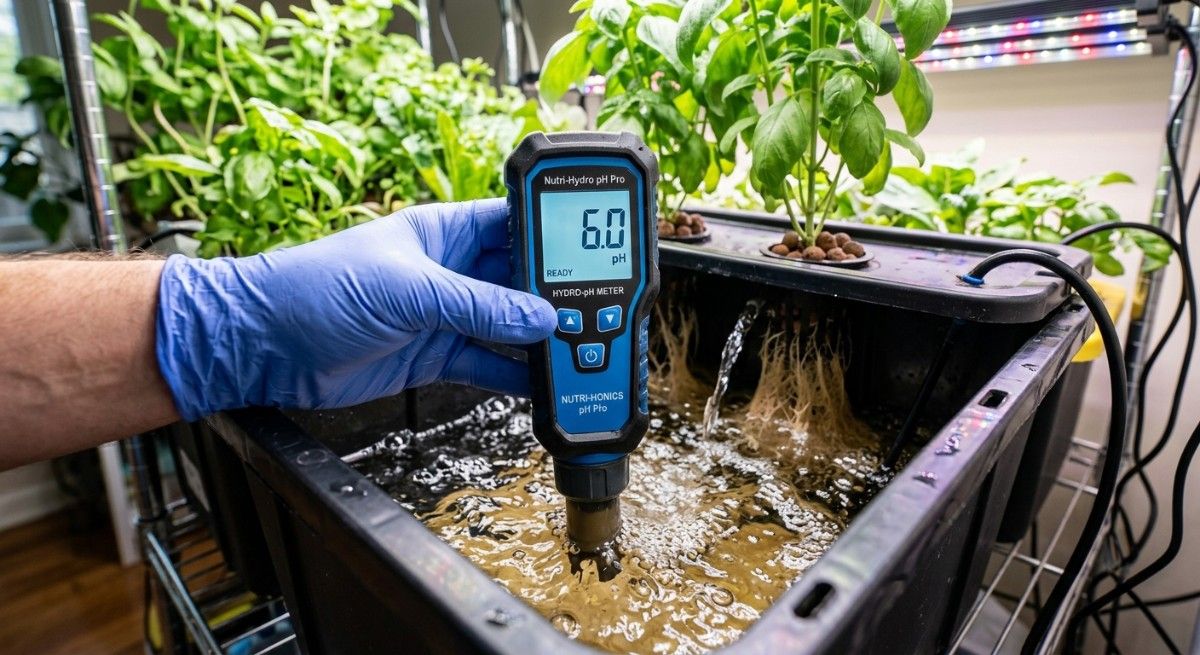
Imagine spending weeks tending to your hydroponic garden — carefully mixing nutrients, maintaining perfect lighting, and monitoring temperature — only to watch your plants wilt, yellow, and stall for no obvious reason. You’ve fed them well. The water looks clean. So what went wrong?
The answer, more often than not, is pH.
In hydroponic growing, pH is not just another number on a checklist. It is the master control dial that determines whether the nutrients you’ve dissolved into your water are actually accessible to your plants — or simply locked away in chemical limbo. Without accurate, reliable pH monitoring, even the most dialed-in nutrient recipe can fail completely.
That’s where choosing the right pH meter becomes critical.
This guide covers everything you need to know: why pH matters so deeply in hydroponics, what features to look for in a quality meter, our top product picks across every budget and experience level, and the maintenance habits that will keep your readings accurate for years to come. Whether you’re growing basil on a kitchen countertop or running a full commercial grow operation, this is the definitive resource for finding the best pH meter for hydroponics in 2025.
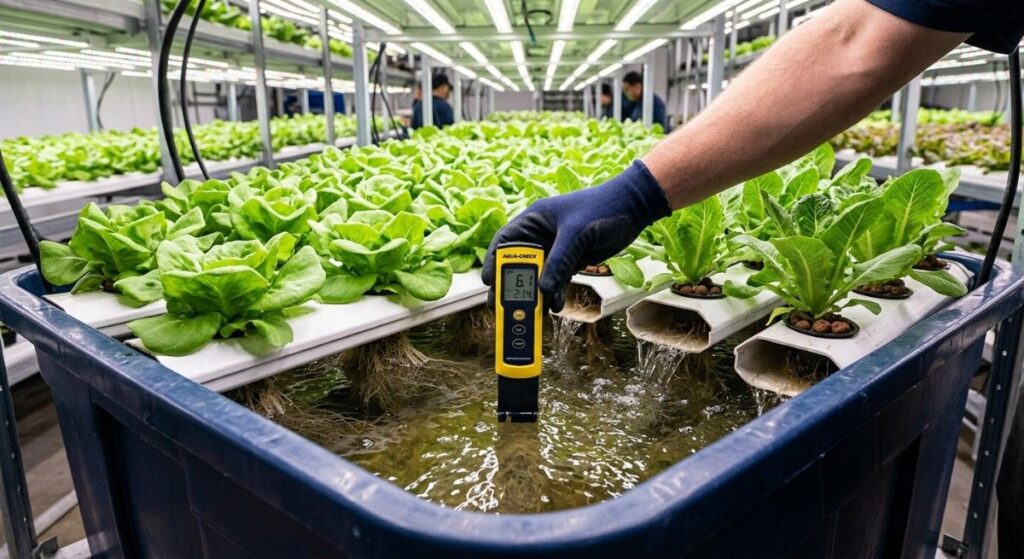
Why pH Is the Most Critical Variable in Hydroponics
The Science of Nutrient Availability
pH is a measure of how acidic or alkaline a solution is, expressed on a scale from 0 to 14, with 7 being neutral. In hydroponics, this number directly controls the solubility and bioavailability of the sixteen essential nutrients your plants need to survive and thrive.
Here’s the part many beginners don’t fully grasp: nutrients can be present in your solution and still be completely unavailable to your plants if the pH is off. Iron, for example, becomes almost inaccessible when the pH climbs above 6.5. Calcium and magnesium, on the other hand, become dangerously scarce in overly acidic conditions below 5.5. Your plants could be swimming in nutrients yet effectively starving — a phenomenon known as nutrient lockout.
The Optimal pH Range for Hydroponic Systems
For most hydroponic crops, the sweet spot sits between pH 5.5 and 6.5 — a slightly acidic range where the chemistry aligns to make virtually all essential nutrients available simultaneously. Many experienced growers aim for pH 6.0 as their daily target, treating it as the compromise point where the broadest range of nutrients remains accessible.
Different crops can have slightly different preferences within this window. Lettuce and leafy greens do well toward the lower end of the range, while fruiting plants like tomatoes often perform best at a slightly higher pH. But as a universal rule, keeping your system within 5.5–6.5 prevents the vast majority of nutrient-related problems hydroponic growers face.
What Happens When pH Goes Wrong
When pH drifts outside the optimal band, the consequences show up quickly and visibly. You may notice yellowing leaves (chlorosis), purple or reddish discoloration on stems, stunted root development, slow or stalled growth, and reduced yields. The cruel irony is that these deficiency symptoms will persist even if you keep adding more nutrients — because the problem isn’t the lack of nutrition, it’s the pH barrier preventing uptake.
This is why frequent, accurate pH testing is not optional in hydroponics. It is the single habit that separates thriving gardens from failed ones.
What to Look for in the Best pH Meter for Hydroponics
Not all pH meters are created equal, and choosing the wrong one for your setup can lead to erratic readings, constant recalibration headaches, and ultimately, poor plant health. Here are the key features to evaluate before making a purchase.
Accuracy and Resolution
For hydroponic use, aim for a meter rated at ±0.01 pH accuracy and a display resolution of 0.01 pH. While budget pens often advertise ±0.1 accuracy, that margin of error is wide enough to leave your nutrient solution in sub-optimal territory without you realizing it. Higher-end models with tighter tolerances eliminate the guesswork.
Automatic Temperature Compensation (ATC)
pH readings are temperature-sensitive — a solution that reads pH 6.0 at 68°F will read slightly differently at 80°F. Automatic Temperature Compensation (ATC) adjusts readings in real time based on the current solution temperature, ensuring accurate results regardless of ambient or reservoir conditions. This feature is particularly important for grow rooms where temperatures fluctuate throughout the day.
Calibration Options
All pH meters drift over time, which means regular calibration is non-negotiable. Look for meters that support two-point or three-point calibration using standard buffer solutions (typically pH 4.0 and 7.0 for hydroponics). Single-point calibration offers less precision, while three-point calibration provides the widest accuracy across the full pH range.
Waterproof Design
Hydroponic environments involve constant water exposure. A waterproof or at least splash-resistant design is essential for longevity. Look for an IP67 or higher waterproof rating to ensure the meter can withstand occasional immersion without damage.
Electrode Type and Replaceability
The electrode (probe) is the heart of any pH meter. Standard single-junction glass electrodes work well in most applications, while double-junction electrodes provide better protection against contamination from nutrient-rich solutions and offer a longer service life. Meters with replaceable probes are also worth the investment — when the electrode eventually wears out, you can swap just the probe rather than buying an entirely new meter.
Build Quality and Durability
A pH meter used in a grow room encounters high humidity, nutrient splashes, and frequent handling. Rubberized grip casings, reinforced probe housing, and quality electronic components make a real difference in how long your meter lasts and how consistently it performs.
Additional Features
Some meters offer bonus functionality worth considering: EC/TDS (electrical conductivity/total dissolved solids) measurement in addition to pH, data logging capability for tracking trends over time, Bluetooth connectivity for remote monitoring, and alarm systems that alert you when readings drift outside a preset range.
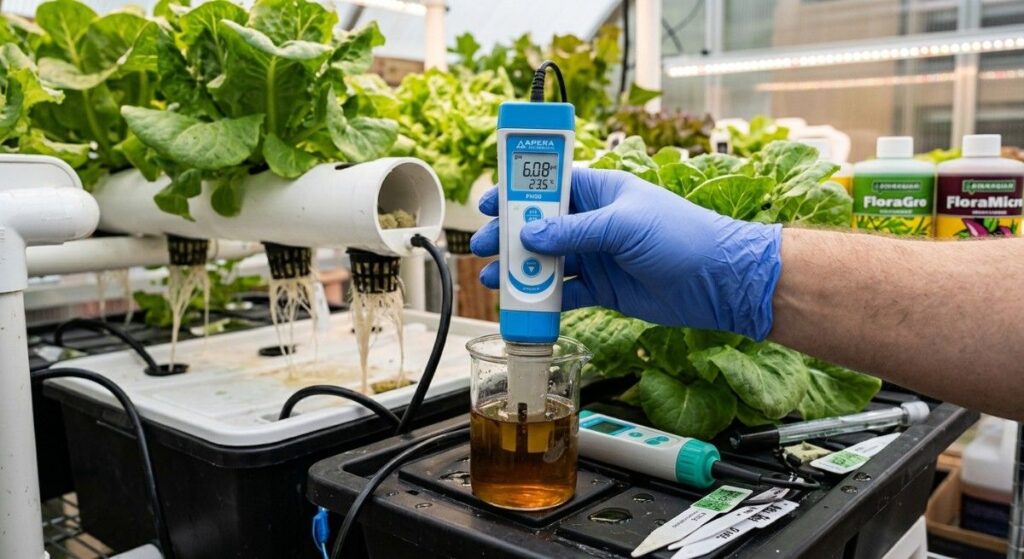
Top pH Meters for Hydroponics in 2025
After reviewing specifications, user feedback, and real-world performance in hydroponic environments, here are the standout performers across every category of grower.
Best Overall: Bluelab pH Pen
The Bluelab pH Pen is the most recommended pH meter among experienced hydroponic growers — and for good reason. It is purpose-built for the high-humidity, nutrient-rich environments of a professional grow facility and performs reliably day after day with minimal fuss.
The standout feature is its double-junction probe with a lab-quality glass electrode, which responds rapidly to changes in solution chemistry and resists contamination better than standard single-junction designs. Its fully waterproof construction, compact pocket-clip design, and clear LED display make it practical for both daily spot-checks and extended use.
The Bluelab pH Pen also includes a drift alert that notifies you when recalibration is needed, removing the guesswork from your maintenance schedule. Its battery life is excellent, and the device’s automatic shut-off helps conserve power during storage.
The trade-off is price — this is one of the more expensive pH pens on the market. But given its longevity, accuracy, and reputation as the industry workhorse, most serious growers consider it a “buy once, cry once” investment.
Best for: Intermediate to professional growers who want industry-trusted reliability.
Best for Beginners: Apera Instruments AI209 PH20
For growers who are just getting started, the Apera Instruments AI209 PH20 is widely considered the best pH meter for hydroponics beginners. It strikes an excellent balance between affordability, accuracy, and ease of use — providing reliable readings out of the box without requiring technical expertise.
The PH20 features automatic temperature compensation, a large backlit LCD display, and a waterproof housing rated for regular use in wet environments. One of its most useful features is the 30-day calibration indicator built into the display, which tells you exactly when it’s time to recalibrate — a detail that beginners often overlook until their readings start drifting.
The kit comes complete with pH 4.0 and pH 7.0 calibration sachets and KCl storage solution, meaning you can start testing accurately on day one. Its double-junction probe minimizes contamination and extends the electrode’s effective lifespan.
Best for: New growers, apartment setups, and anyone building their first hydroponic system.
Best Professional Grade: Apera Instruments AI311 PH60
For growers who demand laboratory-level precision, the Apera Instruments AI311 PH60 stands out as one of the most advanced portable pH meters available at a consumer-accessible price. It delivers ±0.01 accuracy with rapid stabilization and an advanced three-point calibration system that covers a broad range of pH conditions.
The PH60’s defining advantage is its replaceable electrode design. Most entry-level pH meters require full replacement when the sensor degrades, but the PH60 allows you to swap just the probe — a significant long-term cost saving that experienced growers appreciate. It is also fully waterproof (IP67 rated), making it suitable for the most demanding grow room conditions.
Its large, easy-to-read display, fast response time, and comprehensive kit accessories make it a smart choice for anyone running multiple nutrient tanks or managing more complex hydroponic setups.
Best for: Commercial growers, research-focused growers, and anyone running large-scale operations.
Best Budget Option: VIVOSUN Digital pH Meter Combo
Alt text: VIVOSUN digital pH meter — affordable and beginner-friendly hydroponics tester
If you’re on a tight budget and need a functional pH meter to get started, the VIVOSUN Digital pH Meter Combo delivers acceptable accuracy for basic hydroponic monitoring without breaking the bank. It offers simple two-point calibration, a compact design, and automatic temperature compensation — all the essentials needed to keep your nutrient solution in check.
The VIVOSUN combo typically includes a pH meter and a TDS/EC meter bundled together, offering good value for growers who want to monitor both pH and nutrient concentration simultaneously. While it doesn’t match the precision or longevity of premium options, it provides a solid entry point for growers who want to learn the fundamentals before upgrading.
Note that budget meters tend to drift more quickly and require more frequent calibration, so plan to check your readings regularly.
Best for: Budget-conscious beginners, trial runs, and supplementary backup meters.
Best Multi-Parameter Meter: Milwaukee MW102 pH/Temperature Meter
For large hydroponic setups where data reliability matters as much as accuracy, the Milwaukee MW102 pH/Temperature Meter is a favorite among commercial operators. It measures both pH and temperature simultaneously, displaying readings on a clear dual-line display with ±0.01 pH accuracy and ±0.1°C temperature precision.
The MW102 features automatic buffer recognition during calibration, a replaceable pH electrode, and a weatherproof housing that stands up to demanding grow environments. It also supports two-point calibration with standard buffers and includes a built-in temperature sensor for real-time ATC.
Its professional build quality, data reliability, and straightforward operation make it ideal for growers who check pH multiple times per day across large reservoirs or multiple grow zones.
Best for: Large commercial grows, greenhouse operations, and growers who prioritize data-level precision.
Best Combo Meter: Bluelab Combo Meter
The Bluelab Combo Meter earns its place on this list by measuring three critical parameters — pH, electrical conductivity (EC), and temperature — in a single device. For growers who want comprehensive control over their nutrient solution without juggling multiple instruments, this is an outstanding all-in-one tool.
Its large, easy-to-read digital display presents all three values simultaneously, and the meter comes with replaceable probes for both pH and EC measurement, extending its useful life considerably. The build quality is on par with Bluelab’s pH Pen — rugged, waterproof, and designed for daily use in professional grow environments.
The price point is higher, but for growers managing complex nutrient schedules where both pH and EC need frequent monitoring, consolidating into a single reliable device offers real practical benefits.
Best for: Growers managing full nutrient programs who want EC and pH monitoring in one tool.
How to Calibrate Your pH Meter for Accurate Readings
Having the best pH meter for hydroponics is only half the equation. Calibration is what turns a quality instrument into a trustworthy one. Here is how to calibrate correctly and maintain your readings over time.
Understanding Calibration Buffer Solutions
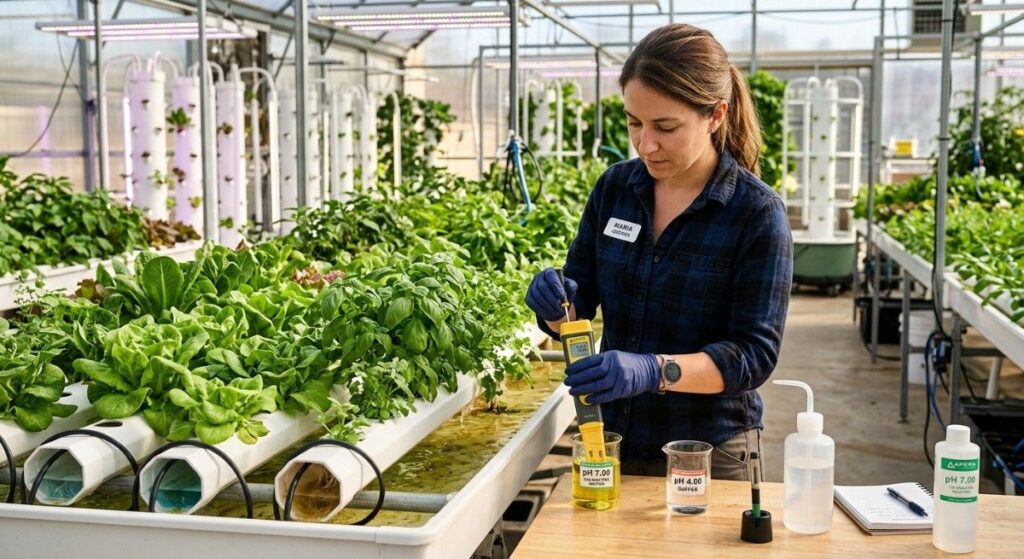
Buffer solutions are laboratory-prepared liquids with a precisely known, stable pH — typically pH 4.0, 7.0, and 10.0. They serve as the reference point against which your meter calibrates itself. For hydroponic use, you’ll primarily work with pH 7.0 (neutral) and pH 4.0 (acidic), since the growing range falls in the acidic zone. Always use fresh buffer solution, and never dip your meter directly into the stock bottle — pour a small amount into a separate cup to avoid contaminating your supply.
Step-by-Step Calibration Process
Start by rinsing the probe tip thoroughly with distilled water, then gently shake off the excess drops. Place the probe into your pH 7.0 buffer first and wait 30–60 seconds for the reading to stabilize before pressing the calibration button. Once confirmed, rinse again with distilled water, then repeat the process with the pH 4.0 buffer for your second calibration point. Most modern digital meters automatically recognize which buffer you’re using based on the reading, making the process simple even for beginners.
How Often to Calibrate
As a general rule, calibrate at least once per week for regular home growing, or before each grow cycle at minimum. You should also recalibrate immediately after replacing the probe, changing batteries, handling the meter roughly, or any time readings seem inconsistent with your expectations. Investing a few minutes in calibration pays dividends in the form of trustworthy data throughout your entire grow.
Proper pH Meter Maintenance and Storage
A well-maintained pH meter will serve you reliably for years. These habits will protect your investment and keep readings accurate.
Probe Storage
Never store your pH meter probe dry. The glass membrane at the tip of the electrode must remain hydrated to function correctly — drying out permanently degrades its sensitivity. Always store the probe submerged in a dedicated pH storage solution (potassium chloride, or KCl) when not in use. Avoid using distilled or deionized water for storage, as these can actually leach electrolytes out of the probe and cause damage over time.
Rinsing and Cleaning
After every use, rinse the probe with distilled water before and after taking readings. This prevents cross-contamination between samples and removes nutrient residue that can clog the reference junction over time. For stubborn deposits, a gentle soak in a dilute cleaning solution (many brands offer probe cleaning solutions) can restore responsiveness.
When to Replace the Probe
Even with perfect maintenance, pH electrodes have a finite lifespan — typically one to two years with regular use. Signs that your probe needs replacing include: readings that take an unusually long time to stabilize, persistent inaccuracies even after fresh calibration, visible cloudiness or damage to the glass tip, or a probe that simply refuses to hold calibration between sessions. With meters that offer replaceable electrodes, this is a straightforward and cost-effective fix.
pH Testing Best Practices for Hydroponic Growers
How Often Should You Test pH?
In the beginning stages of a new grow — or when learning how your specific system behaves — test your nutrient solution once per day. Once your system stabilizes and you understand its patterns, testing every two to three days is generally sufficient for most home grows. Larger reservoirs tend to be more pH-stable than small ones because they have a greater buffering capacity, while smaller tanks can swing more dramatically as plants consume water and nutrients.
Testing Technique for Accurate Results
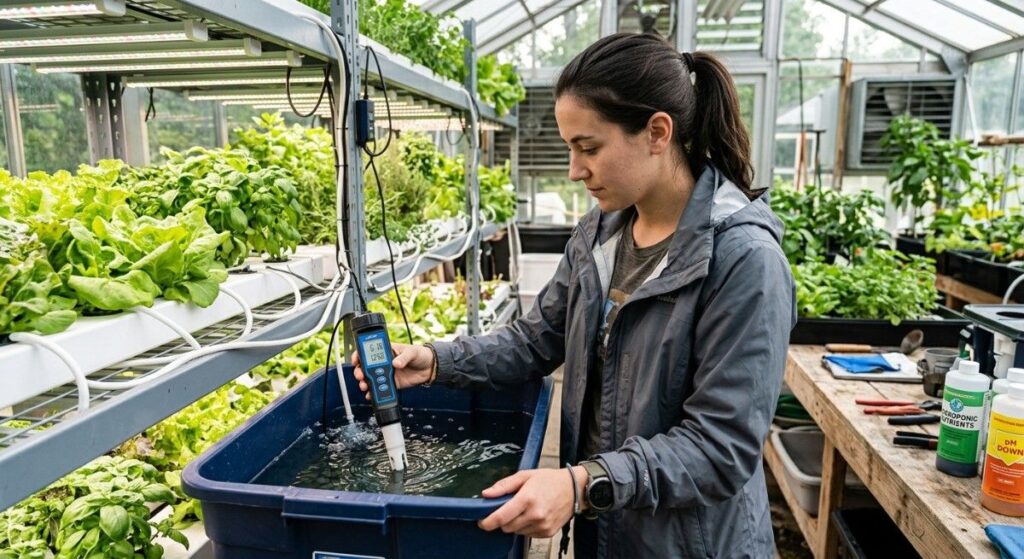
Always collect a small sample from your reservoir and test in a clean cup rather than dipping directly into the tank. This prevents probe contamination and ensures the sample is representative of your solution. Stir your nutrient solution before sampling to ensure even distribution, and allow your pH meter a full 30–60 seconds to stabilize before recording the reading.
Adjusting pH When It Drifts
When your readings fall outside the 5.5–6.5 range, use pH Up (potassium hydroxide-based) or pH Down (phosphoric acid-based) solutions to bring them back into range. Always add these adjusters gradually — a few drops at a time, mixed thoroughly — and wait 15–20 minutes before retesting. Large, sudden pH swings are more stressful to plants than gradual adjustments. Keep a simple log of your readings and how much adjuster you used; over time, you’ll develop a feel for your system’s natural drift patterns and anticipate corrections before they become problems.
Comparing pH Meter Types: Pens, Benchtop, and Combo Meters
pH Pens (Pocket Testers)
pH pens are the most popular format for hydroponic growers. They’re compact, portable, easy to store in a grow room, and typically affordable. The Bluelab pH Pen and Apera PH20 both fall into this category. Pens are ideal for routine spot-checks and are the go-to choice for most home and small commercial growers.
Benchtop pH Meters
Benchtop meters are larger, more powerful instruments designed for stationary use in a grow room or lab. They typically offer higher accuracy, more calibration points, data logging, and connectivity features. They’re the choice of commercial operations and research-oriented growers who need the highest possible data reliability.
Combo / Multi-Parameter Meters
Combo meters like the Bluelab Combo Meter combine pH measurement with EC and temperature in a single device. They’re particularly useful for growers managing detailed nutrient programs, as EC (electrical conductivity) reflects the overall concentration of dissolved nutrients in your solution — a critical companion metric to pH.
Common Mistakes Hydroponic Growers Make with pH
Storing the probe dry. This is the single fastest way to ruin a pH electrode. Always keep the tip in storage solution.
Calibrating infrequently. Meter drift is real. Weekly calibration keeps your readings trustworthy.
Making large, rapid adjustments. Chasing pH by adding large amounts of adjuster causes pH to overshoot in the opposite direction. Small, incremental additions with waiting time in between is always the right approach.
Testing immediately after adding nutrients. Nutrients can temporarily affect pH readings. Wait at least 15–30 minutes after mixing and aerating your solution before taking a pH reading.
Contaminating buffer solutions. Pouring buffer solution directly from the stock bottle or using a dirty container introduces contaminants that throw off calibration accuracy.
Ignoring temperature effects. A nutrient solution measured at room temperature versus reservoir temperature can yield different readings. Use a meter with ATC or ensure you’re testing at a consistent temperature.
Conclusion: Invest in the Right Tool, Protect Your Entire Grow
Your hydroponic system is only as healthy as its pH. No amount of premium nutrients, optimized lighting, or advanced growing media can compensate for a pH level that locks your plants out of their food. The right pH meter transforms a potential source of chronic failure into one of the most controllable variables in your entire operation.
For most growers, the Bluelab pH Pen offers the best combination of accuracy, durability, and ease of use. If you’re just starting out, the Apera PH20 provides everything you need at a fraction of the cost. For those running larger, more complex operations, the Apera PH60 or Milwaukee MW102 offer professional-grade performance that pays for itself in crop quality and consistency.
Whichever model you choose, pair it with regular calibration, proper probe storage, and a consistent testing routine. These habits take minutes per week but protect hundreds of hours of growing effort.
Have questions about choosing a pH meter for your specific setup? Drop them in the comments below — and if this guide helped you, share it with a fellow grower who could use a better handle on their water chemistry.
Happy growing.
Frequently Asked Questions
What is the ideal pH for hydroponics? The optimal pH range for most hydroponic systems is 5.5 to 6.5, with pH 6.0 often used as a general target for balanced nutrient availability.
How often should I test pH in my hydroponic system? Test daily during the early stages of a grow or when you’re learning your system. Once stable, every two to three days is typically sufficient.
Can I use a soil pH meter for hydroponics? Soil pH meters are generally not suitable for hydroponic nutrient solutions. They’re designed for a different medium and may give inaccurate readings in liquid solutions. Always use a liquid-rated digital pH meter.
How long does a pH meter probe last? With proper storage and maintenance, a quality pH probe can last one to two years. Signs of aging include slow response, persistent drift, and inability to hold calibration.
What’s the difference between pH pens and pH meters? The terms are often used interchangeably. “pH pens” typically refer to slim, pocket-sized digital testers, while “pH meters” can describe any digital device — from pens to full benchtop instruments. Both work on the same principles.