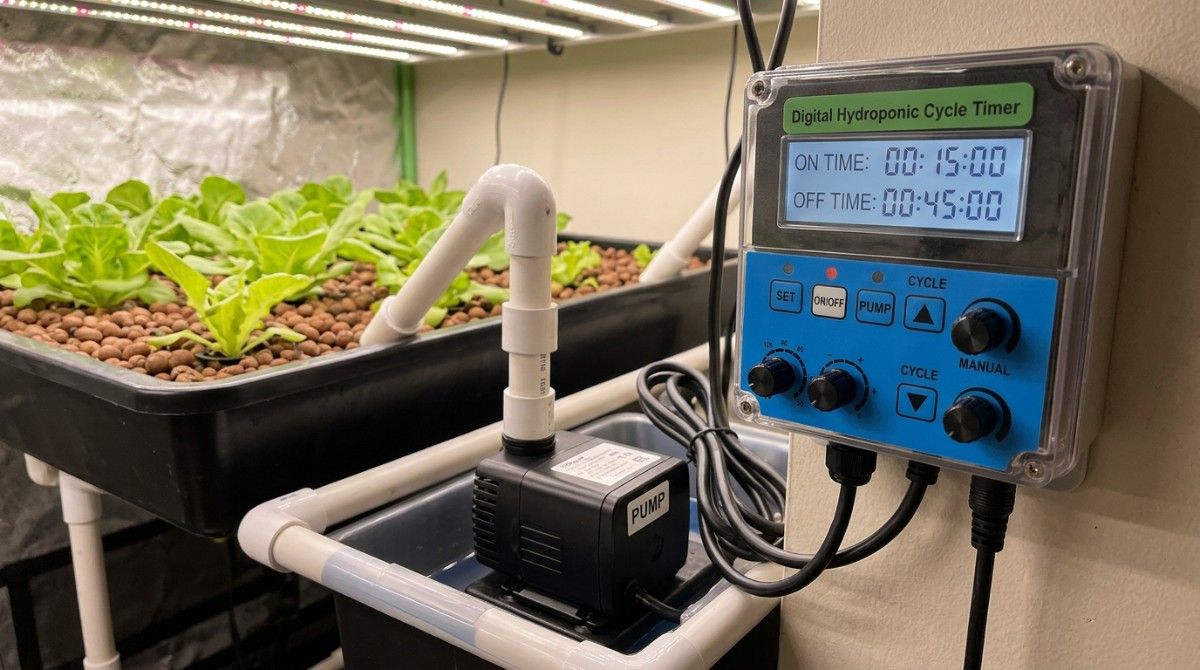
Hydroponic gardening makes growing plants faster, cleaner, and often more productive than traditional soil gardening. But even though hydroponics removes soil from the equation, it introduces a new challenge: controlling water and nutrients with precision.
Many beginners make the same mistake—either running the pump all the time or forgetting to run it often enough. Unfortunately, both situations can harm plants. Too much water can suffocate roots, while too little can leave them dry and stressed.
That’s where a hydroponic pump timer becomes incredibly valuable.
A pump timer automates the irrigation process by controlling when the pump turns on and off. Instead of manually operating your pump several times a day, the timer does the work for you. The result is consistent watering cycles, healthier roots, and stronger plant growth.
In this guide, we’ll walk through everything you need to know about hydroponic pump timers, including:
What a hydroponic pump timer is
Why it is essential for successful hydroponic growing
The different types of timers available
Recommended timer settings for common hydroponic systems
Setup instructions and troubleshooting tips
By the end of this article, you’ll understand how to use a pump timer to create the perfect watering schedule for your hydroponic plants.
What Is a Hydroponic Pump Timer?
A hydroponic pump timer is a small device that automatically controls when your water pump runs in a hydroponic system.
Instead of leaving the pump on continuously, the timer turns it on and off at scheduled intervals. This allows plants to receive nutrient-rich water periodically while still giving their roots access to oxygen.
In simple terms, the timer works by:
Turning the pump on, allowing nutrient solution to circulate through the system
Delivering water and nutrients to plant roots
Turning the pump off, giving roots time to breathe and absorb oxygen
This cycle repeats automatically throughout the day.
Why is this important? Because hydroponic roots need both moisture and oxygen. If roots remain submerged in water constantly, oxygen levels drop and plants can suffer from root rot.
Pump timers are commonly used in hydroponic setups such as:
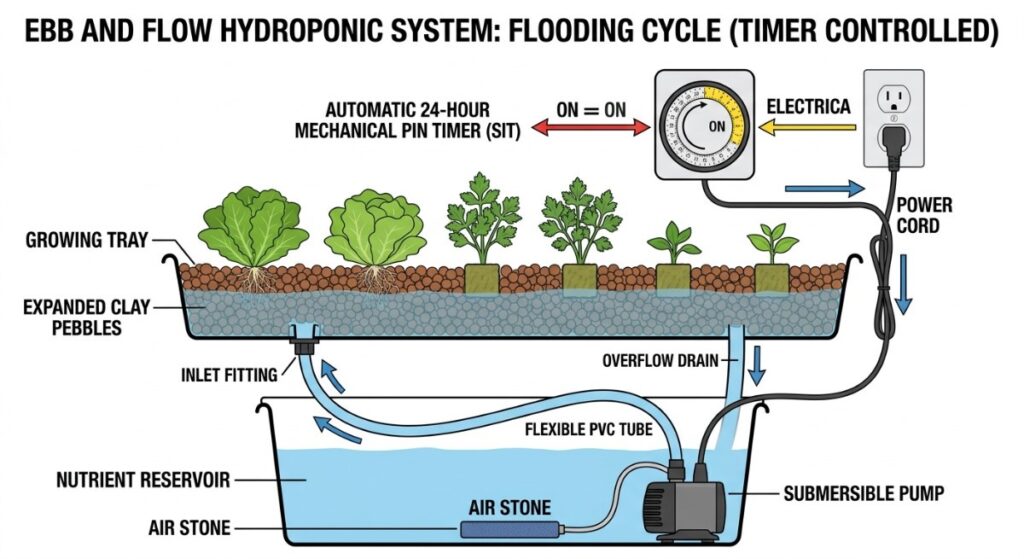
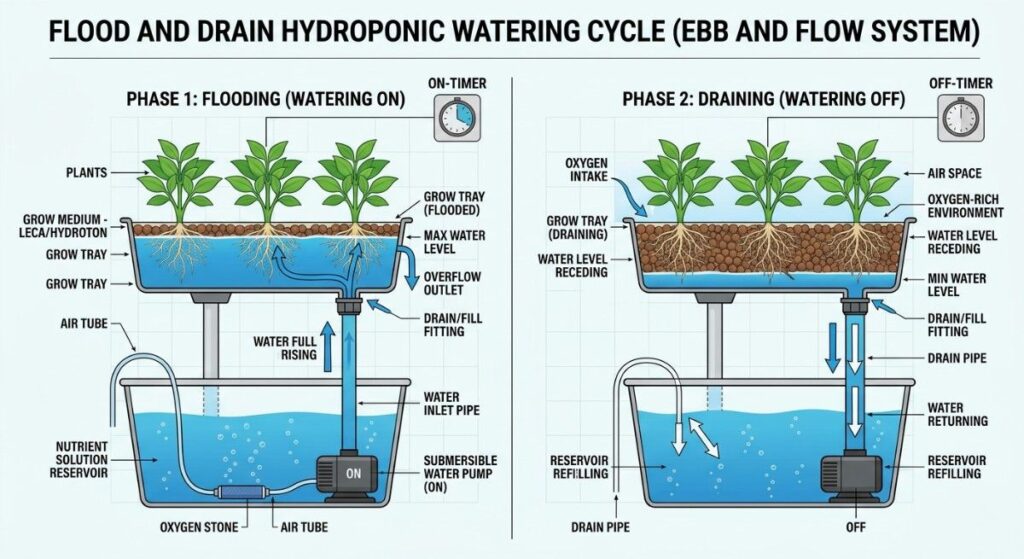
Flood and drain (ebb and flow) systems
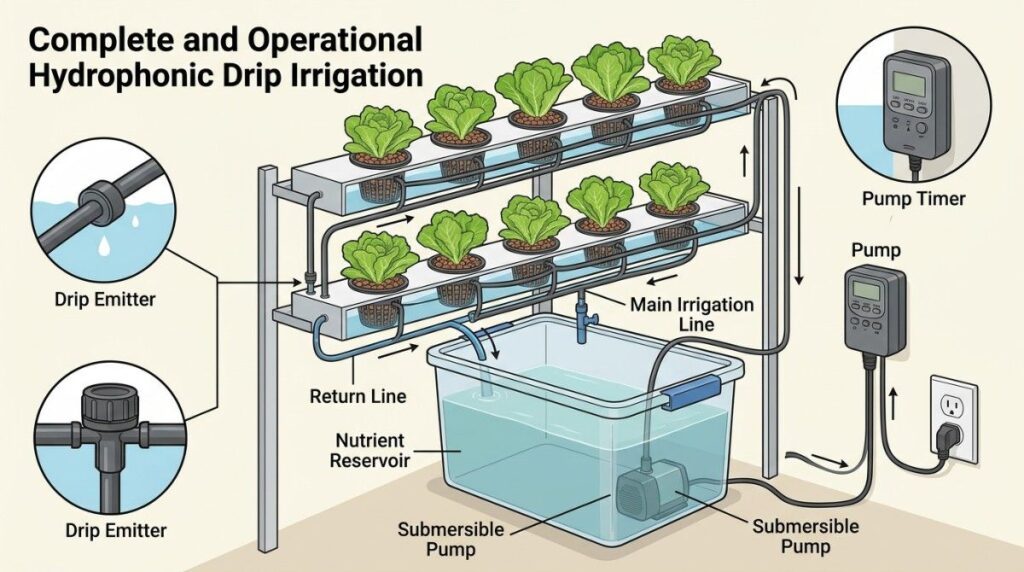
Drip hydroponic systems
Aeroponics setups
Certain NFT systems
Without a timer, growers would need to manually switch the pump on and off several times per day—which is obviously inconvenient and unreliable.
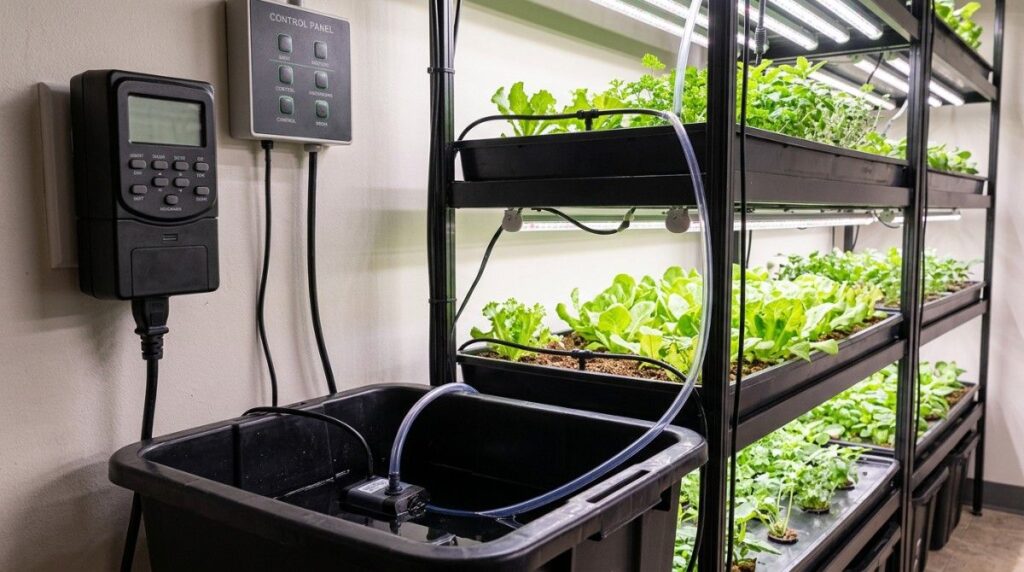
Why a Hydroponic Pump Timer Is Essential
A hydroponic system may look simple, but it relies on precise timing and nutrient delivery. A pump timer helps keep everything running smoothly.
Here are some of the biggest benefits.
Consistent Nutrient Delivery
Plants growing in hydroponics depend entirely on nutrient solutions for their food supply. Unlike soil plants, they cannot search for nutrients in surrounding soil.
A timer ensures that plants receive regular and predictable nutrient feedings throughout the day.
This consistency helps plants:
Grow faster because nutrients are always available when needed
Absorb minerals more efficiently without sudden shortages
Develop strong root systems that support rapid growth
Without consistent irrigation cycles, plants may experience irregular feeding, which can slow growth and reduce yields.
Improved Root Oxygenation
One of the most overlooked aspects of hydroponics is oxygen availability for roots.
Roots absorb oxygen from air pockets between watering cycles. When roots stay submerged for too long, oxygen levels decrease and the root zone can become unhealthy.
A pump timer helps by creating a balanced wet-dry cycle. During the “on” phase, the roots receive water and nutrients. During the “off” phase, the system drains or pauses, allowing oxygen to return to the root zone.
This cycle keeps roots:
Well hydrated
Properly oxygenated
Protected from root rot and fungal issues
Healthy roots are the foundation of a successful hydroponic garden.
Reduced Manual Work
Hydroponic gardening can quickly become time-consuming if you try to manage everything manually.
Imagine needing to switch your pump on and off five or six times per day. Not only would that be inconvenient, but it would also be easy to forget.
With a pump timer, irrigation becomes fully automated.
Once programmed, the timer handles the entire watering schedule. This allows growers to spend more time focusing on:
Monitoring plant health
Adjusting nutrient levels
Improving lighting and environmental conditions
Automation is one of the reasons hydroponics is so efficient.
Energy Efficiency
Running a pump continuously consumes electricity and can increase operating costs.
A timer reduces energy use by ensuring the pump only runs when necessary.
This provides several benefits:
Lower electricity bills for indoor growers
Less wear on the pump motor, extending its lifespan
Reduced heat buildup in the nutrient reservoir
Over time, these small savings can make a significant difference.
Healthier Plants and Higher Yields
When irrigation cycles are optimized, plants grow in a stable environment.
This leads to several positive outcomes:
Stronger stems and foliage
Faster vegetative growth
Better flowering and fruit production
In many cases, simply adding a pump timer can dramatically improve hydroponic results.
Types of Hydroponic Pump Timers
Not all timers work the same way. Understanding the different types can help you choose the best option for your system.
Mechanical Timers
Mechanical timers are the simplest and most affordable option.
They usually feature a rotating dial with small pins that control when the pump turns on and off.
Advantages of Mechanical Timers
Affordable and widely available
Mechanical timers are usually inexpensive and can be found in most gardening or hardware stores.Very easy to use
Setting up a mechanical timer typically involves pushing down small pins that represent on/off periods. This makes them beginner-friendly.Reliable with minimal electronics
Because they rely on simple mechanical parts rather than digital circuits, these timers can be surprisingly durable.
Limitations
Limited precision
Most mechanical timers only allow intervals of 15 minutes or more, which is not ideal for systems requiring short watering cycles.Less flexibility in programming
Compared to digital timers, they offer fewer customization options.
Mechanical timers work best for simple hydroponic setups like ebb and flow systems.
Digital Timers
Digital timers offer more advanced scheduling capabilities.
Instead of rotating dials, they use electronic programming to control pump cycles.
Advantages of Digital Timers
Highly precise timing
Many digital timers allow programming down to the minute or even the second.Multiple watering schedules
Growers can create several irrigation cycles throughout the day.More control over irrigation patterns
This flexibility is ideal for systems that require frequent watering.
Drawbacks
Slightly higher cost
Digital timers are usually more expensive than mechanical versions.Requires programming
Some beginners may need a few minutes to learn how to set them up.
Despite this, digital timers are often the best option for most hydroponic growers.
Cycle Timers
Cycle timers are designed specifically for hydroponics and indoor gardening.
Instead of programming specific times of day, you set a repeating pattern such as:
Pump ON for 2 minutes
Pump OFF for 10 minutes
Repeat continuously
Benefits of Cycle Timers
Extremely precise control over watering cycles
Perfect for systems that require frequent irrigation.Ideal for aeroponics and drip systems
These setups often need short bursts of water.Very easy to adjust as plants grow
Changing the cycle duration takes only a few seconds.
Downsides
More expensive than basic timers
Because they are specialized equipment, they cost a bit more.
Professional growers often choose cycle timers because they offer the highest level of control.
Best Hydroponic Systems That Use Pump Timers
Pump timers are useful in several hydroponic setups.
Ebb and Flow (Flood and Drain)
In this system, the grow tray fills with nutrient solution and then drains back into the reservoir.
A pump timer controls when the flooding occurs.
Typical schedules include flooding the tray several times per day, ensuring roots receive nutrients while also allowing time to dry slightly between cycles.
Drip Hydroponic Systems
Drip systems deliver nutrient solution slowly to each plant through small tubes.
Timers regulate when the drip begins and how long it lasts.
Short watering cycles repeated throughout the day keep the root zone moist without oversaturating it.
Aeroponics
Aeroponic systems spray a nutrient mist directly onto plant roots.
Because roots are suspended in air, they must be misted frequently.
Timers in aeroponic setups control very short spray intervals, sometimes lasting only a few seconds.
Nutrient Film Technique (NFT)
NFT systems usually run pumps continuously, but some growers still use timers to control pump activity.
Using a timer can reduce energy consumption and prevent nutrient solution from overheating.
Recommended Hydroponic Pump Timer Settings
The perfect timer schedule depends on your system type, plant size, and environmental conditions.
Here are some common starting points.
Ebb and Flow Systems
Most growers flood the grow tray four to six times per day.
Each flood cycle typically lasts about 10 to 15 minutes, which is long enough to fully saturate the growing medium.
Young plants may need fewer floods until their roots become larger.
Drip Systems
Drip hydroponics usually uses short but frequent watering cycles.
A common approach is watering every two to three hours for several minutes.
As plants mature and consume more water, the frequency can be increased.
Aeroponics
Aeroponic systems require the most precise timing.
Typical cycles involve:
A short spray period lasting a few seconds
A rest period of several minutes before the next spray
This keeps roots moist while still exposing them to plenty of oxygen.
How to Set Up a Hydroponic Pump Timer
Setting up a timer is quick and simple.
Step 1: Choose the Right Timer
Select a timer that can handle your pump’s electrical load and offers the interval precision required for your hydroponic system.
Digital timers or cycle timers are usually the best choice.
Step 2: Connect the Timer
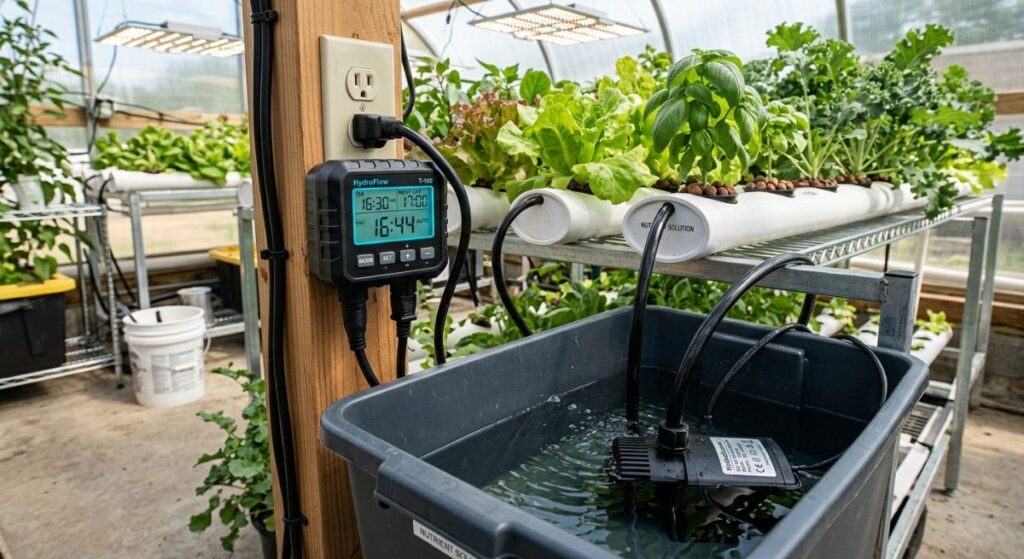
Plug the timer into your power outlet, then plug your pump into the timer.
Once connected, the timer will control when the pump receives power.
Step 3: Program the Watering Schedule
Set the timer according to your desired irrigation cycle.
Make sure the timing aligns with your system type and plant needs.
Step 4: Test the System
Before leaving the system unattended, run a few test cycles.
Watch how the water flows, how long flooding takes, and whether the system drains correctly.
Testing ensures everything works as expected.
Conclusion
A hydroponic pump timer might seem like a small piece of equipment, but it plays a huge role in maintaining a healthy hydroponic system.
By automating watering cycles, a timer ensures plants receive the right balance of water, nutrients, and oxygen.
With proper timer settings, you can:
Improve plant growth
Protect roots from overwatering
Reduce manual maintenance
Lower energy costs
Whether you’re growing leafy greens, herbs, or fruiting plants, optimizing your pump timer schedule can make a major difference in your results.
Take some time to experiment with your watering cycles, observe how your plants respond, and adjust as needed. With the right setup, your hydroponic garden can thrive with minimal effort.
And if you found this guide helpful, feel free to share it with fellow hydroponic growers or leave a comment about your own pump timer setup.
FAQs
What is a hydroponic pump timer and why is it important?
A hydroponic pump timer is a device that automatically controls when your hydroponic system’s water pump turns on and off. It regulates the flow of nutrient solution to plant roots at specific intervals. Using a timer ensures plants receive consistent watering and oxygen, which helps prevent overwatering, root rot, and nutrient imbalance. It also reduces manual work and keeps your hydroponic system running efficiently even when you’re not around.
How often should a hydroponic pump timer run?
The ideal schedule for a hydroponic pump timer depends on the type of hydroponic system you are using. For example, ebb and flow systems typically run the pump for 15–30 minutes every 2–4 hours, while drip systems may run more frequently in shorter intervals. Seedlings and young plants usually need shorter cycles, while mature plants may require longer watering periods. Monitoring plant health and root moisture will help you fine-tune the timer schedule.
What type of timer is best for hydroponic pumps?
The best hydroponic pump timer is usually a digital cycle timer because it allows precise control over seconds, minutes, and hours. Mechanical timers are simpler and more affordable but often limit the number of cycles per day. Digital timers are ideal for advanced hydroponic setups such as aeroponics or drip irrigation, where frequent and precise watering cycles are required.
Can I use a regular timer for a hydroponic pump?
Yes, you can use a standard electrical timer for a hydroponic pump as long as it supports the pump’s voltage and wattage. However, many growers prefer hydroponic-specific timers because they offer shorter cycle intervals and more customization. These features are especially useful for systems that require frequent watering, such as aeroponics or NFT systems.
How do I set up a hydroponic pump timer correctly?
Setting up a hydroponic pump timer is simple. First, plug the timer into a power outlet and connect your water pump to the timer. Next, program the desired watering schedule based on your hydroponic system type. Start with moderate intervals, such as 15 minutes on and 45 minutes off, and adjust as needed depending on plant growth, root moisture, and environmental conditions like temperature and humidity.