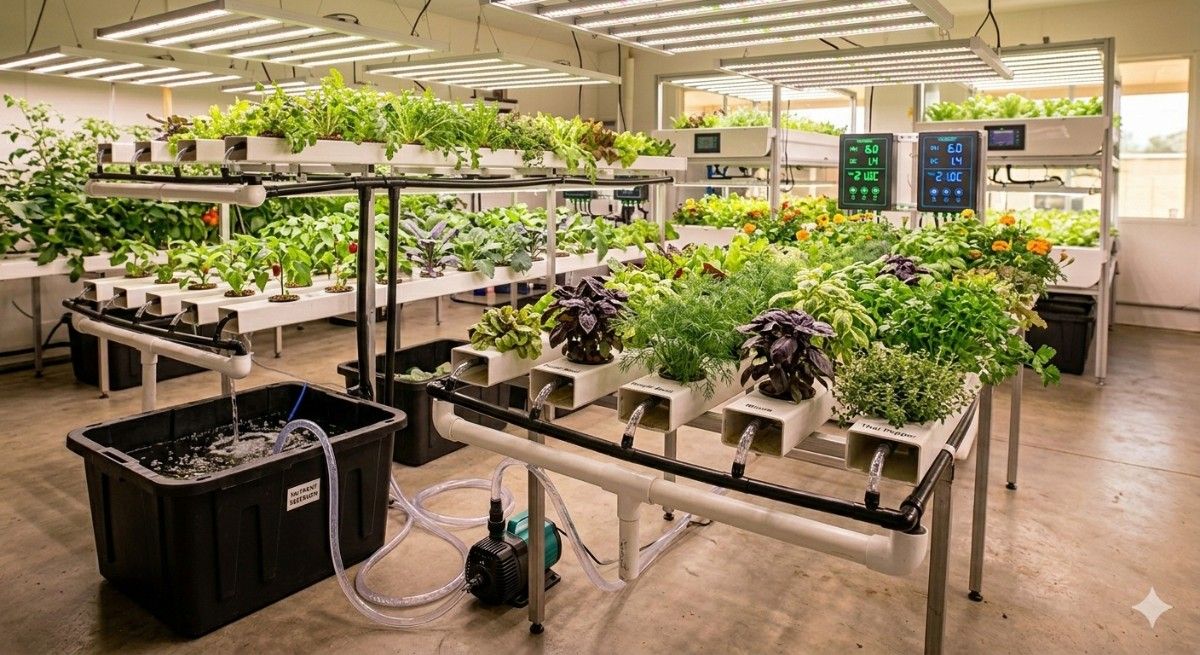
Imagine walking into a lush, vibrant garden where plants grow 30% faster than they do in soil, yet use 90% less water. It sounds like science fiction, but it is the reality of a recirculating hydroponic system.
Whether you are a hobbyist trying to grow the perfect head of butterhead lettuce in your kitchen or a commercial grower looking to optimize efficiency, the “closed-loop” approach is the gold standard of modern agriculture. However, moving from traditional soil gardening to a high-tech water system can feel like learning a new language. How do you keep the roots from rotting? What on earth is “Electrical Conductivity”? And how do you ensure your pump doesn’t fail while you’re at work?
In this comprehensive guide, we will dive deep into the mechanics, benefits, and maintenance of recirculating hydroponics. By the end of this article, you’ll have a professional-grade roadmap to building and sustaining your own high-yield liquid garden.
What is a Recirculating Hydroponic System?
Table of Contents
ToggleAt its core, a recirculating hydroponic system is a method of growing plants where the nutrient-rich water solution is captured after it passes the roots and is pumped back into a central reservoir to be used again.
Unlike “drain-to-waste” systems, where the excess water is simply leached into the ground or a drain, recirculating systems are remarkably sustainable. They create a closed loop that minimizes resource waste and allows for precise control over exactly what your plants are eating.
The Philosophy of "Closed-Loop" Growing
In a world facing increasing water scarcity, the efficiency of these systems isn’t just a perk—it’s a necessity. By recycling the solution, you are essentially creating a self-sustaining ecosystem. The only water lost is through transpiration (the plant “breathing”) and a tiny amount of evaporation.
How It Works: The Science of Recirculation
To understand why these systems work so well, we have to look at the “Root Zone.” In soil, roots have to “hunt” for nutrients and oxygen. In a recirculating system, the nutrients are delivered directly to the doorstep.
The Role of Dissolved Oxygen
The biggest challenge in any water-based system is preventing the plants from “drowning.” While it sounds counterintuitive, plants need oxygen in their root zone to perform cellular respiration. Recirculating systems solve this by:
Splashing: As water returns to the reservoir, it breaks the surface tension, pulling oxygen into the water.
Air Stones: Most systems use an air pump to bubbles oxygen directly into the solution.
Nutrient Delivery
The nutrient solution is a precise cocktail of nitrogen, phosphorus, potassium, and micronutrients. In a recirculating setup, this solution is constantly moving, which prevents “nutrient stagnant zones” and ensures that every root gets an equal share of the buffet.
Types of Recirculating Systems
Not all recirculating systems are built the same. Depending on your space, budget, and the plants you want to grow, one of these four designs will likely be your best bet.
Deep Water Culture (DWC)
DWC is perhaps the most famous recirculating method. In a recirculating DWC (RDWC), plants are suspended in net pots over large buckets of water. These buckets are connected by PVC piping to a main reservoir.
Best for: Large, thirsty plants like tomatoes, peppers, and cannabis.
Pro Tip: Use a high-quality air pump; in RDWC, oxygen is your best friend against root rot.
Nutrient Film Technique (NFT)
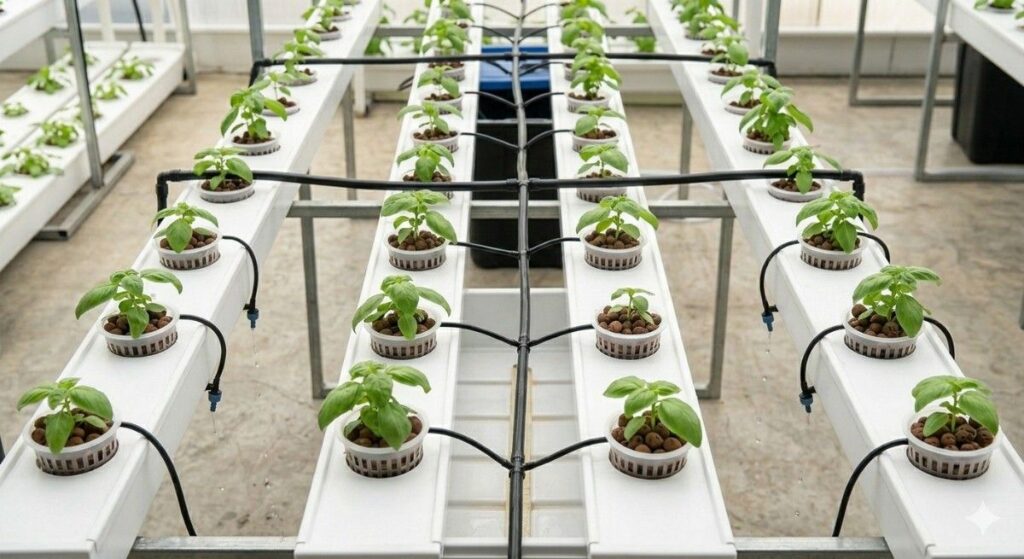
In an NFT system, a very shallow stream (a “film”) of nutrient-rich water is constantly recirculated over the roots of the plants, which are housed in long, slightly tilted channels.
Best for: Quick-growing leafy greens and herbs.
Ebb and Flow (Flood and Drain)
This system works by periodically flooding a grow tray with nutrient solution and then allowing it to drain back into the reservoir. This “tidal” movement pulls fresh oxygen into the root zone every time the water recedes.
Best for: A variety of plant sizes; very forgiving for beginners.
Aeroponics
Aeroponics is the “Formula 1” of hydroponics. Roots hang in the air and are misted with nutrient solution every few minutes. While highly efficient, it requires high-pressure pumps and is less forgiving of power outages.
The Benefits: Why Go Recirculating?
Why deal with pumps and timers when you could just use a watering can? The advantages are backed by data.
Water Conservation: You can save up to 90% more water compared to traditional soil farming. This makes it ideal for arid climates or indoor setups.
Faster Growth Rates: Because plants don’t have to expend energy growing massive root structures to find food, they put all that energy into foliage and fruit.
Space Efficiency: You can grow vertically or in tighter configurations because the “soil volume” is no longer a constraint.
No Weeds or Soil-Borne Pests: Say goodbye to tilling, weeding, and soil-based fungi.
Essential Components of a Recirculating Setup
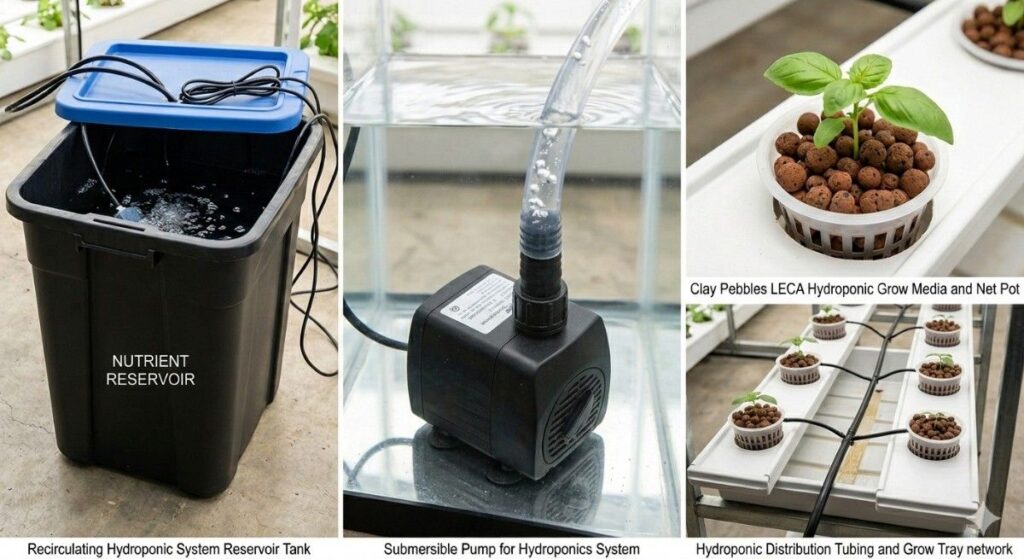
Before you start buying PVC pipe, you need a checklist of the “Big Five” components:
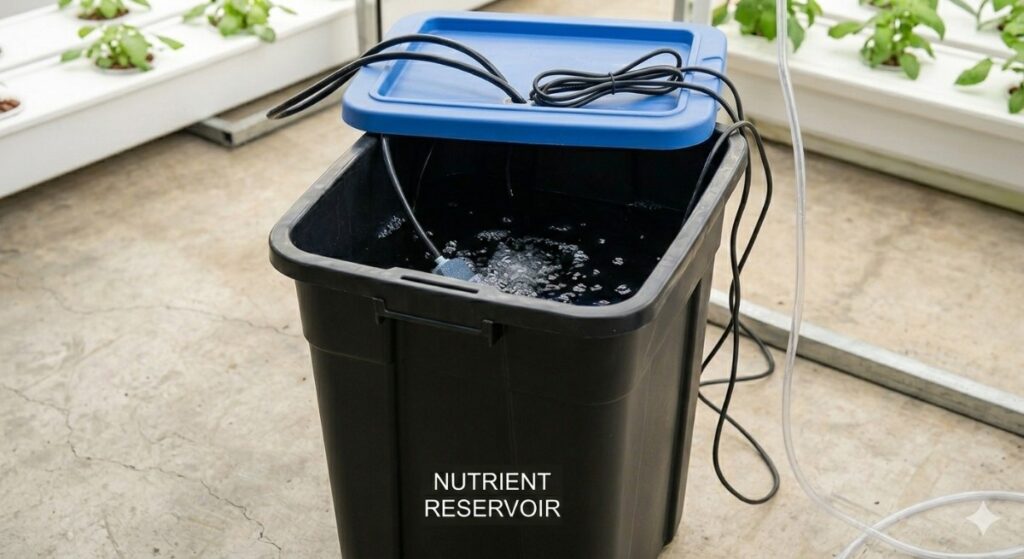
The Reservoir: A dark, food-grade plastic container to hold your water. It must be opaque to prevent algae growth.
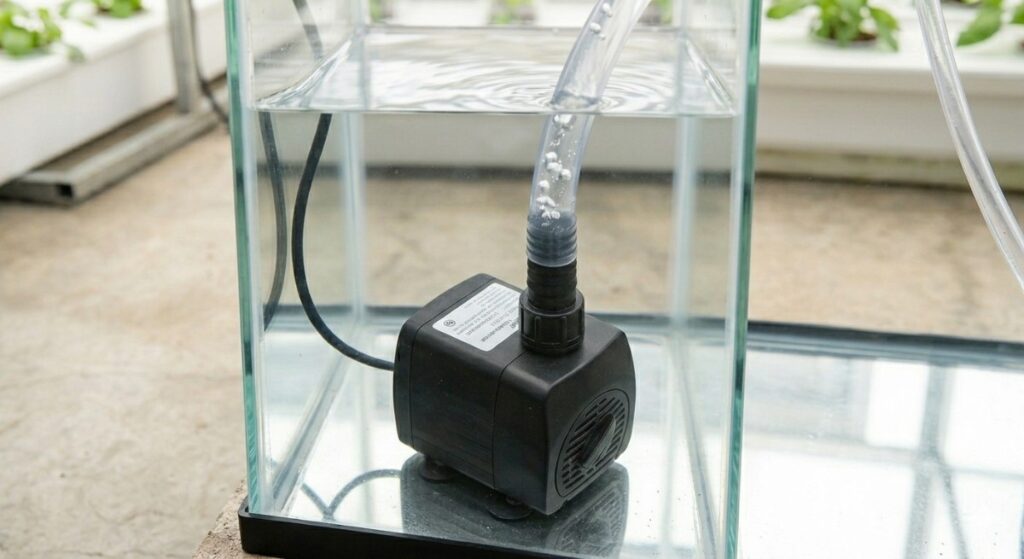
Submersible Pump: This is the heart of your system. It moves water from the reservoir to the plants.
Delivery Lines: Tubing or PVC pipes that transport the water.
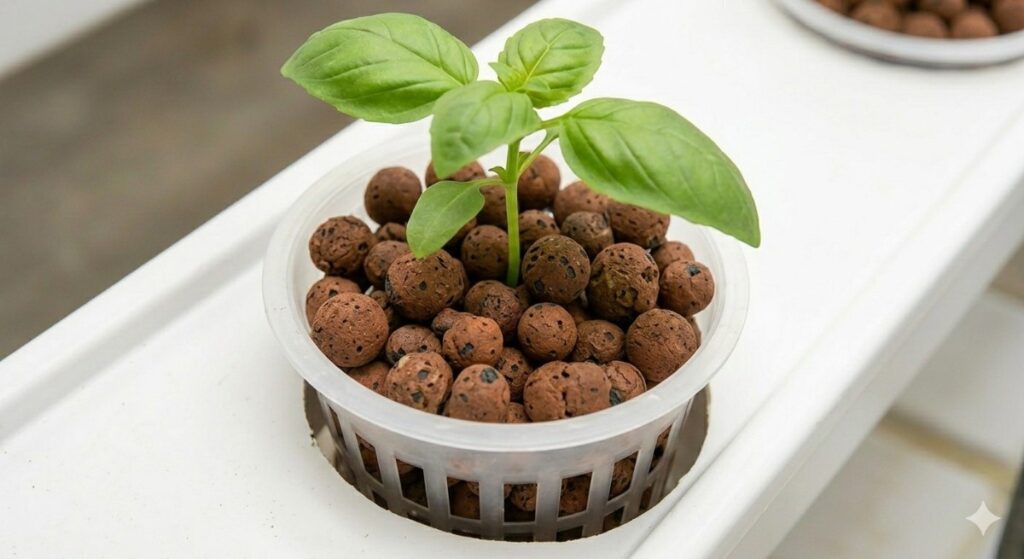
Grow Media: Instead of soil, you’ll use inert materials like clay pebbles (LECA), rockwool, or perlite to support the plant.
The Timer: Critical for Ebb and Flow or Aeroponic systems to regulate feeding cycles.
Managing Your Nutrient Solution: The "Brain" of the System
This is where many beginners get intimidated, but it’s actually quite logical. In a recirculating system, the water changes over time as plants drink. You must monitor three key metrics.
pH Balance (The Gatekeeper)
f your pH is off, your plants cannot “see” the nutrients, even if they are right there. For most hydroponic crops, you want a pH between 5.5 and 6.5.
The Science: Use a digital pH meter daily. If it’s too high, add “pH Down”; if too low, add “pH Up.”
Electrical Conductivity (EC) and PPM
EC measures the salts (nutrients) in your water.
The “Thirsty Plant” Syndrome: If your EC rises over time, your plants are drinking more water than nutrients. You should add plain, pH-balanced water.
The “Hungry Plant” Syndrome: If your EC drops, your plants are eating fast. You need to add more nutrient concentrate.
Reservoir Temperature
Roots love a “cool drink.” Ideally, your reservoir should stay between 18°C and 22°C (65-72°F).
Why it matters: Warm water holds less oxygen and invites Pythium (root rot). If your water gets too hot, consider a water chiller or insulating your reservoir.
Common Challenges and Troubleshooting
Even the best-designed recirculating hydroponic system will face hiccups. Here’s how to handle them like a pro.
Root Rot (The Silent Killer)
If your roots look brown and slimy instead of white and fuzzy, you have root rot.
Solution: Increase oxygenation, lower the water temperature, and consider using a beneficial bacteria supplement like Bacillus amyloliquefaciens.
Algae Blooms
Algae competes for nutrients and can clog your pumps.
Solution: Light is the enemy. Ensure your reservoir and grow channels are 100% light-proof.
Pump Failure
In a recirculating system, the pump is your “single point of failure.”
Anecdote: I once lost an entire crop of basil because a small piece of perlite jammed my pump while I was away for a weekend.
The Lesson: Always use a filter or “pre-filter” on your pump intake to keep debris out.
Maintenance and Cleaning: The Secret to Long-Term Success
You wouldn’t eat off the same plate for six months without washing it, right? Your system needs a “Reset” every 7 to 14 days.
The Full Reservoir Change: Every two weeks, drain the reservoir entirely and refill it with fresh water and nutrients. This prevents “nutrient lockout” caused by the buildup of unused minerals.
The System Flush: Occasionally run a mild cleaning solution (like diluted H2O2 or a commercial clearing agent) through the lines to break up salt deposits.
Sterilization: Between crops, scrub everything with a 10% bleach solution or food-grade citric acid.
Scaling Up: From Hobbyist to Pro
Once you’ve mastered a single-bucket DWC, you might feel the itch to go bigger.
Automation: Invest in a pH controller that automatically doses your reservoir.
Data Logging: Use sensors to track your EC and temperature trends on your phone.
Hybrid Systems: Many commercial growers use a mix of NFT and DWC to maximize different crop types simultaneously.
Conclusion: Take the Plunge
The recirculating hydroponic system is more than just a gardening method; it’s a masterclass in efficiency and plant biology. While it requires a bit more technical knowledge than a traditional dirt garden, the rewards—explosive growth, pristine produce, and massive water savings—are well worth the effort.
Remember: Start small, monitor your pH and EC religiously, and keep those roots oxygenated.
Ready to start your hydroponic journey? If you found this guide helpful, share it with a fellow gardener or drop a comment below with your biggest “growing” question! I’d love to hear about your setup.
Frequently Asked Questions
How often should I completely change the water in my system?
While you’ll be “topping off” your reservoir with fresh water and nutrients daily or every few days, you should perform a full reservoir change every 7 to 14 days. Over time, plants absorb specific nutrients faster than others, leading to an imbalance of “leftover” minerals (salt buildup) that can eventually become toxic or lock out other nutrients. Think of it as a scheduled “system reset” to keep your plants’ diet perfectly balanced.
Is a recirculating hydroponic system suitable for beginners?
Absolutely, though it does have a slightly steeper learning curve than a basic soil pot. The Ebb and Flow or Deep Water Culture (DWC) methods are great entry points for beginners. The “closed-loop” nature means you have to be more diligent about monitoring pH and EC levels than you would in a “drain-to-waste” system, but the water savings and growth speed make it a very rewarding challenge for a novice grower.
What is the biggest risk of using a recirculating system?
The primary risk is pathogen spread. Because the water is shared among all plants, if one plant develops a disease like Pythium (root rot), the pump will efficiently deliver those spores to every other plant in the system within hours. To mitigate this, keep your water temperatures below 22°C (72°F) and ensure your oxygenation levels (via air stones) are high—pathogens hate oxygenated, cool water.
Can I grow any type of plant in these systems?
While you can grow almost anything, some plants are better suited for specific setups. Leafy greens, herbs, and strawberries thrive in NFT (Nutrient Film Technique) systems because of their smaller root structures. For “heavy feeders” like tomatoes, cucumbers, or peppers, a recirculating DWC or Dutch Bucket system is better, as these provide the massive root space and high nutrient volume those plants crave.
What happens to my plants if the power goes out?
In a recirculating hydroponic system, the pump is the lifeline. If the power fails, the water stops moving and the oxygen levels drop. In systems like NFT or Aeroponics, where roots are exposed to air, they can dry out and die in as little as an hour. If you live in an area with frequent outages, it is highly recommended to have a battery backup (UPS) for your air and water pumps or stick to DWC, where the roots stay submerged in a large volume of water that provides a longer “buffer” time.