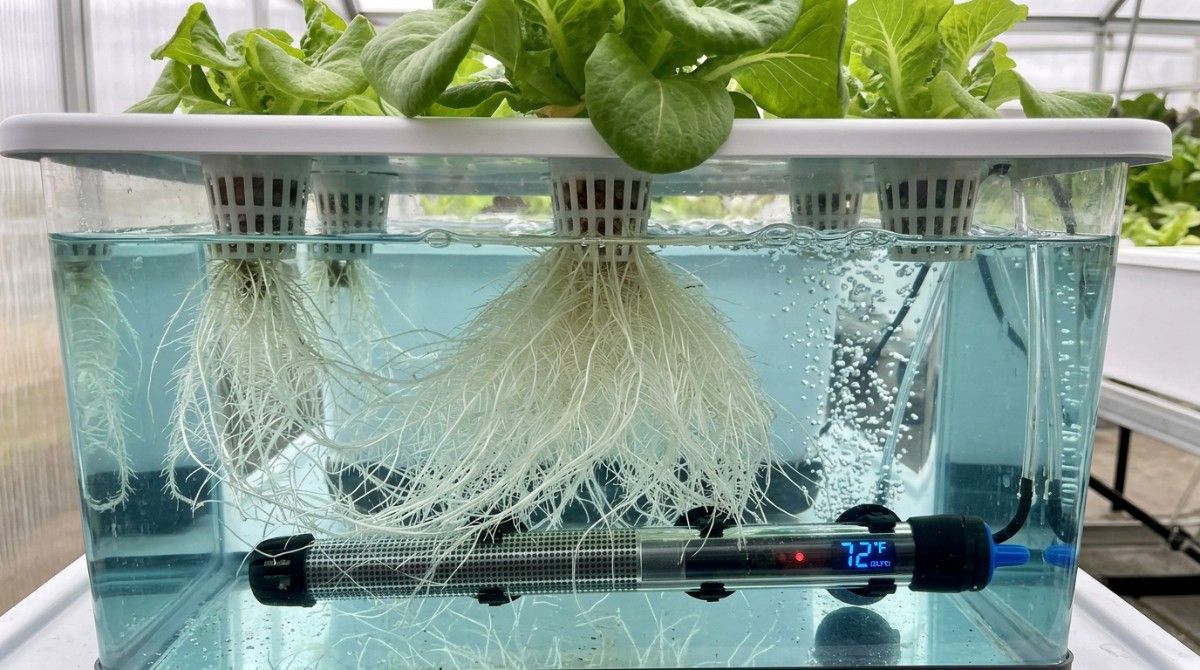
In this comprehensive guide, we will explore why a hydroponic water heater is a non-negotiable tool for serious growers, how to select the right one for your reservoir, and the science of thermal management in water-based gardening.
Why Water Temperature Matters in Hydroponics
The Biological Impact of Cold Roots
Dissolved Oxygen and Temperature
Choosing the Right Hydroponic Water Heater
Submersible vs. Inline Heaters
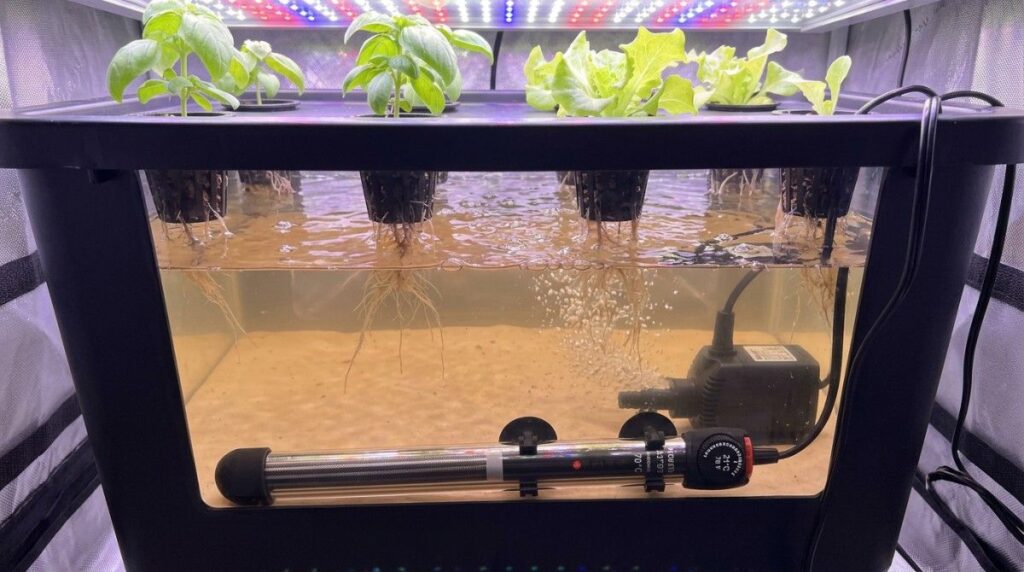
- Submersible Heaters: These are the most common. They sit directly inside your reservoir. They are easy to install but require careful placement to ensure they don’t touch the sides of a plastic reservoir and cause melting.
- Inline Heaters: These are plumbed into your filtration or pump line. They provide more even heating and keep the reservoir clutter-free, making them ideal for large-scale Deep Water Culture (DWC) or Nutrient Film Technique (NFT) systems.
Calculating Required Wattage
- 20-Gallon Reservoir: 75W – 100W heater.
- 50-Gallon Reservoir: 200W – 250W heater.
- 100-Gallon Reservoir: 500W heater (or two 250W heaters for redundancy).
Essential Features to Look For
When shopping for a hydroponic water heater, look for these specific safety and functional features:
Fully Adjustable Thermostat
Dry-Run Protection and Auto-Shutoff
Reservoir levels drop due to evaporation and plant consumption. If your heater becomes exposed to air while active, it can shatter or start a fire. High-quality heaters feature a sensor that kills power if the water level gets too low.
Shatter-Proof Material
Installation Best Practices for Maximum Efficiency
Placement for Uniform Heat
Using External Controllers
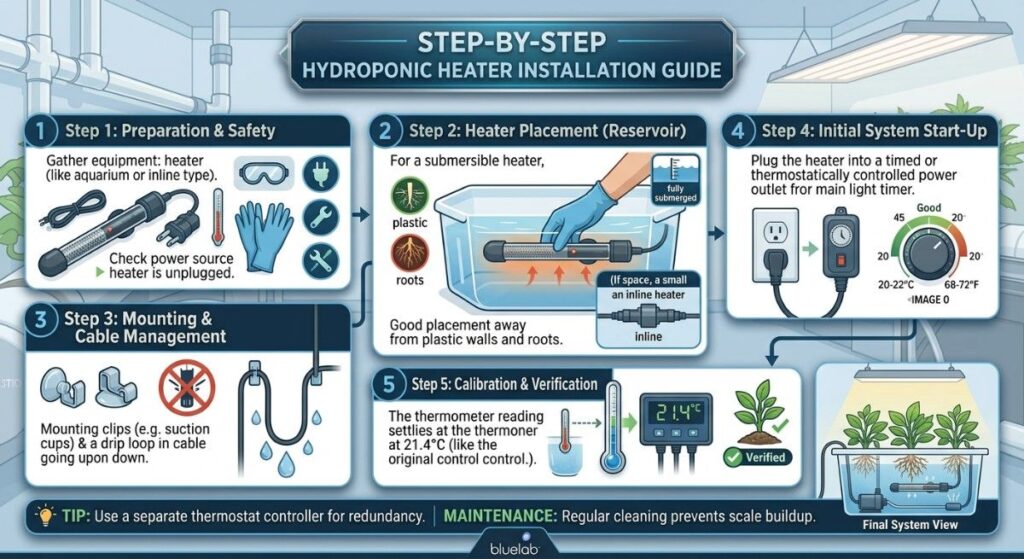
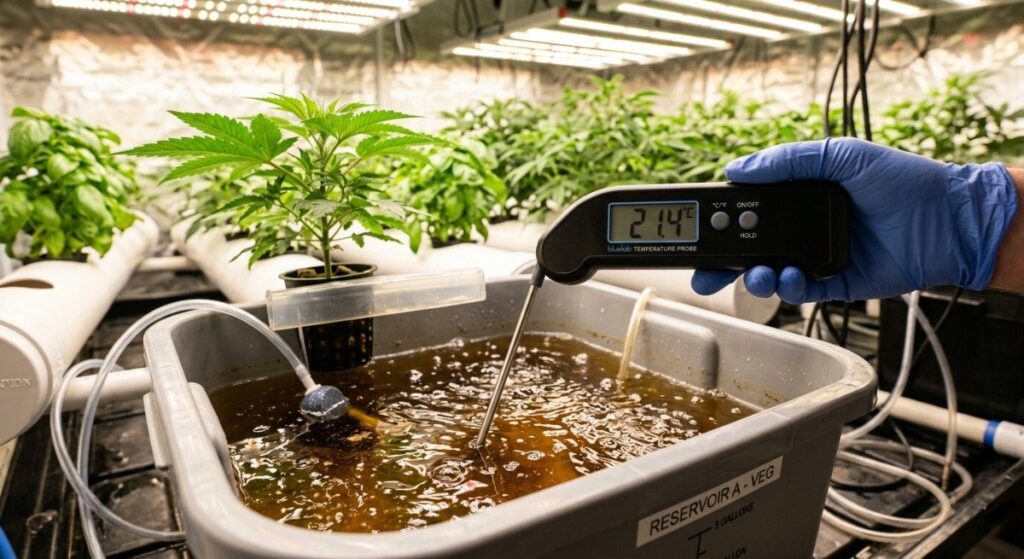
While many heaters have built-in thermostats, they are often inaccurate by 2-3 degrees. For professional results, plug your heater into an external temperature controller. These devices use a separate probe to monitor the water and only provide power to the heater when necessary, offering a secondary layer of safety.
Common Mistakes to Avoid
Overheating the Reservoir
Neglecting Calibration
Maintenance and Longevity
- Vinegar Soaks: Between grows, soak the heater in a weak vinegar solution to dissolve calcium and nutrient scales.
- Cord Integrity: Regularly inspect the power cord for signs of salt creep or wear.
- Positioning Check: Ensure the suction cups haven’t failed, causing the heater to rest against the reservoir wall.
Summary: The Key to Year-Round Success
Frequently Asked Questions
Why is water temperature critical in hydroponics?
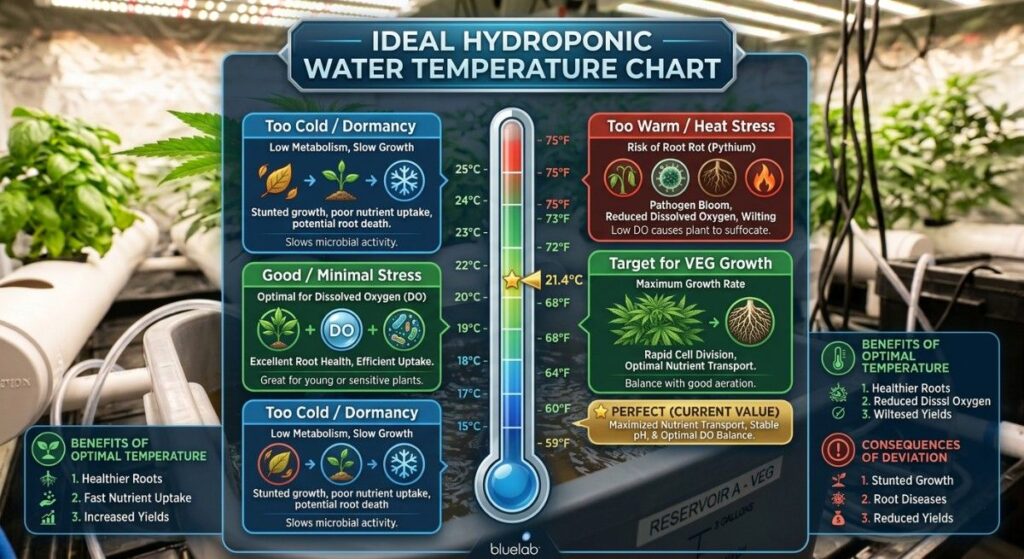
Water temperature directly dictates plant metabolism and oxygen availability. If the water drops below 60°F (15°C), plants may “think” the season is ending, causing their metabolism to slow down and stopping nutrient absorption. Conversely, water that is too warm (above 75°F) cannot hold enough dissolved oxygen, leading to root rot and pathogen growth. Maintaining the “Goldilocks” zone of 65–70°F ensures roots remain active and healthy.
How many watts do I need per gallon?
The general rule of thumb is 3 to 5 watts per gallon of water to raise the temperature by about 10°F above the ambient room temperature. If your grow room is significantly colder (e.g., a garage in winter), you may need up to 10 watts per gallon or multiple heaters to share the load.
Reservoir Size | Standard Load (10°F Boost) | Heavy Load (20°F Boost) |
|---|---|---|
10 Gallons | 50 Watts | 100 Watts |
50 Gallons | 200-300 Watts | 500 Watts |
100 Gallons | 500 Watts | 1000 Watts (or 2x 500W) |
Should I use a glass or titanium heater?
For hydroponics, titanium heaters are superior to glass aquarium heaters. Glass heaters are fragile and can easily shatter if bumped by a pump, roots, or during maintenance, potentially electrocuting the reservoir. Titanium units are unbreakable, corrosion-resistant, and designed for the harsher chemical environment of nutrient solutions.
What is the difference between Submersible and Inline heaters?
Submersible heaters sit directly inside your reservoir. They are cheaper and easier to install but can create “hot spots” if water circulation is poor. Inline heaters are installed into your plumbing (usually after the pump), heating the water as it flows through the pipe. Inline heaters are preferred for larger systems because they ensure even heat distribution and remove electrical equipment from inside the tank.
Do I need an external controller?
Yes, an external temperature controller is highly recommended for safety. Most heaters have built-in thermostats, but they can fail in the “ON” position, cooking your roots. An external controller acts as a failsafe, cutting power to the heater if the temperature exceeds your set limit.
Where should I place the heater in the reservoir?
Place the heater near the water inflow or a circulation pump to ensure the heated water is distributed evenly throughout the tank. Avoid placing it in a stagnant corner, which can cause the heater to short-cycle (turn off prematurely because the water around it is hot while the rest of the tank is cold).